Examination of Original Federal Issue Tools
By Paul A. Boccadoro
In an effort to identify the precise types, sizes, and styles of tools issued by the Federal army, this examination features many excavated tools that were dug in the Army of the Potomac’s 1862-63 winter camp sites throughout Stafford County, Virginia. Also presented here are surviving non-dug issued tools which can be positively identified through carvings on their original handles or by contractor’s date stamps. While these tools do not represent every single style used during by Federal troops, it does provide a nice cross section of many various examples.
Unless otherwise noted, the dug items are from the former collection at White Oak Museum in Falmouth, Virginia, as curated by the late D.P. Newton. Additional information for this article was provided by forester Aaron Cook. Excerpts from the 1865 Quartermaster's Manual are also provided, but note these only serve as a general guide – not only were the specifications published at the end of the war, but original examples still vary from those regulations.


Excavated tools on display at the former White Oak Museum.
Felling Axes
1865 Quartermaster's Manual
"Felling axes, – to be of three sizes, and to be made of the best American iron and steel; blade to be well steeled to the edge; for medium sized axe, length of blade, 7 3/4 inches; width of pole 3 7/16 inches; thickness of pole, 7/8 of an inch; width on edge, 4 3/4 to 5 inches; size of eye 2 3/8 by 3/4 inches, oval in shape. The other sizes to correspond proportionally and with the above specifications, and to all average in weight 56 pounds to the dozen."
"Axe handles, – to be made of good, seasoned hickory wood, 34 to 36 inches long, and free from knots or shakes."
Notice the two major styles of axe heads excavated from the camps: the simple wedge (top row) which resembles a later New England style that was later called the "Yankee" style at the turn of the 20th century (USFS Axe Manual); and the wedge with the "axe lip" or "lug" (middle and bottom row) which gives more wood to metal contact, and an extra steady and durable fitting of the handle into the eye of the axe head (Gränsfors Bruks). There was a wide variety of sizes of axe heads excavated in Stafford County, but the examples here represent a good cross section of the size range.
Some of the heads studied show use as wedge or mallet by having a severely battered butt end. Some axe heads were found to have the upper toe of the bit angled upward. Note that the original lengths of all heads could have been originally longer, but from continuous sharpening they may have been shortened. The first head in the middle row, dug from the camp of the 6th Maine, is the closest to its original shape.
There was an absence of double-bit axes in the collection of excavated artifacts, and none have been seen in original photographs of Civil War troops. The double-bit axe was invented in Pennsylvania by William Mann around 1850. By 1860, the double-bit axe was very common in the Northeast, but it appears that government contracts did not purchase this type, at least according to available photographic evidence and dug originals. Because its popularity was generally limited to the Northeast, it is doubtful the design was used extensively, if at all, in the South.



Hatchets
1865 Quartermaster's Manual
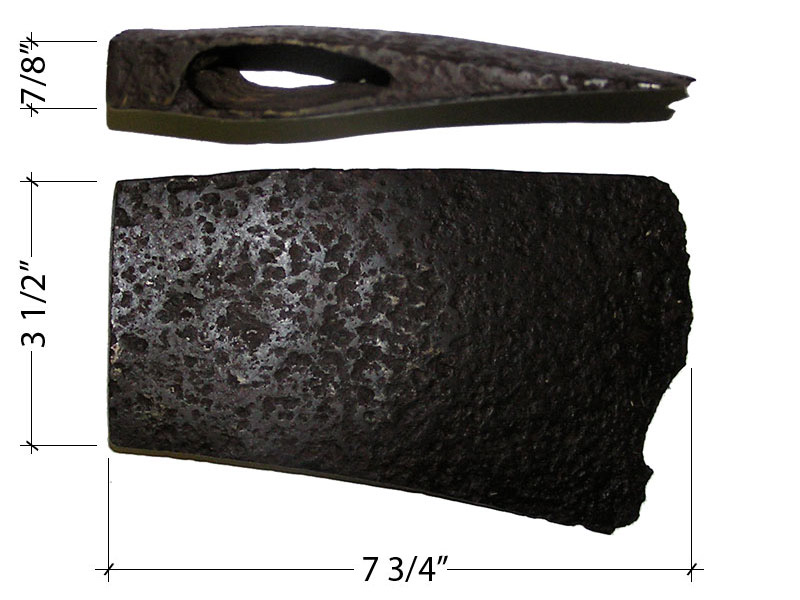
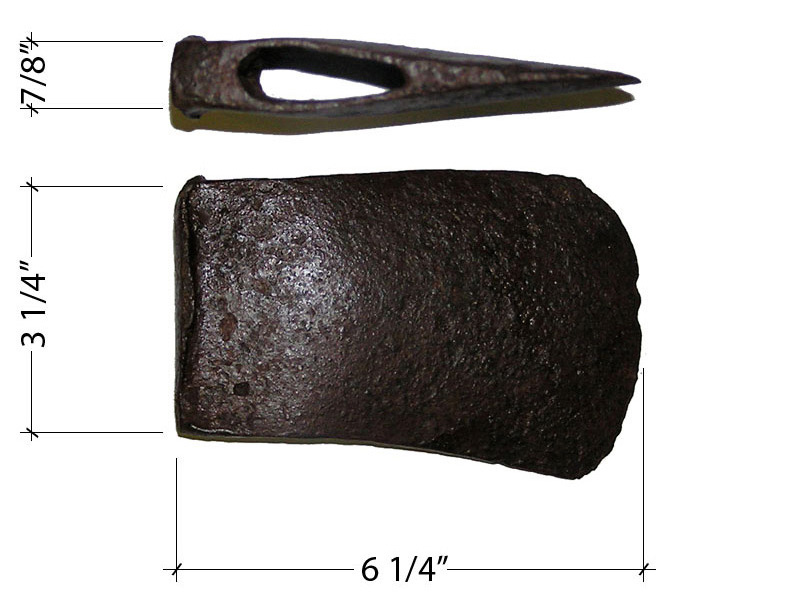
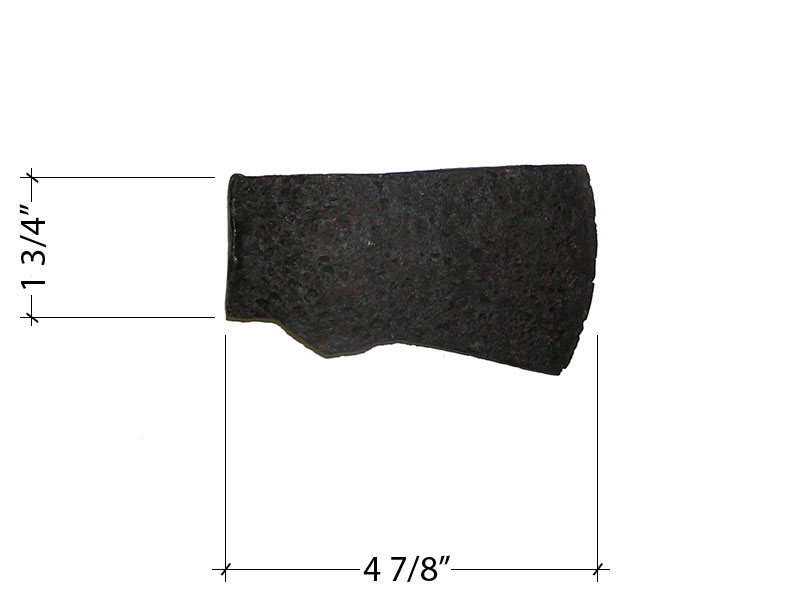
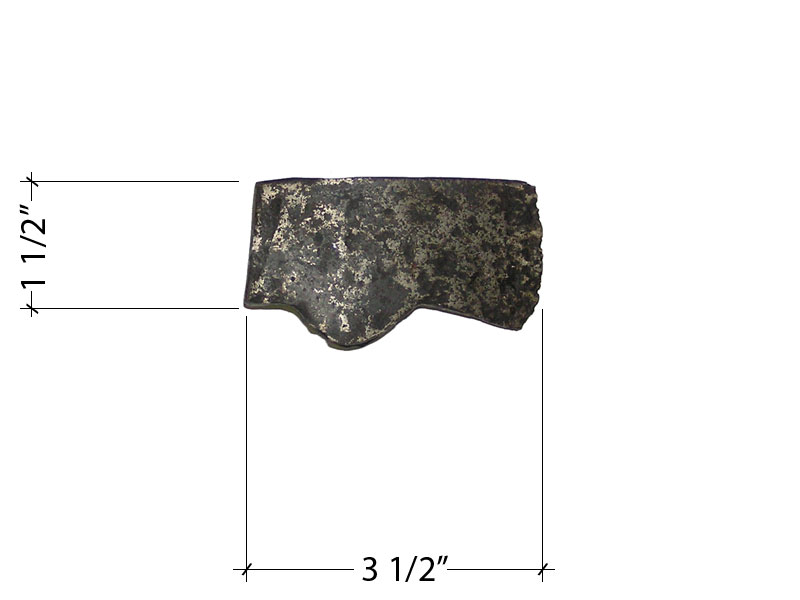
"Hatchets, – to be of the best American iron, steeled at the edge; 5 1/8 inches long; pole 1 7/8 inches long by 5/8 of an inch in thickness; eye oval, 1 1/2 by 3/8 of an inch in size; blade 2 3/4 inches on the edge; weight 18 ounces."
"Hatchet handles, – to be made of good, seasoned hickory wood, 14 inches long, and free from knots or shakes."
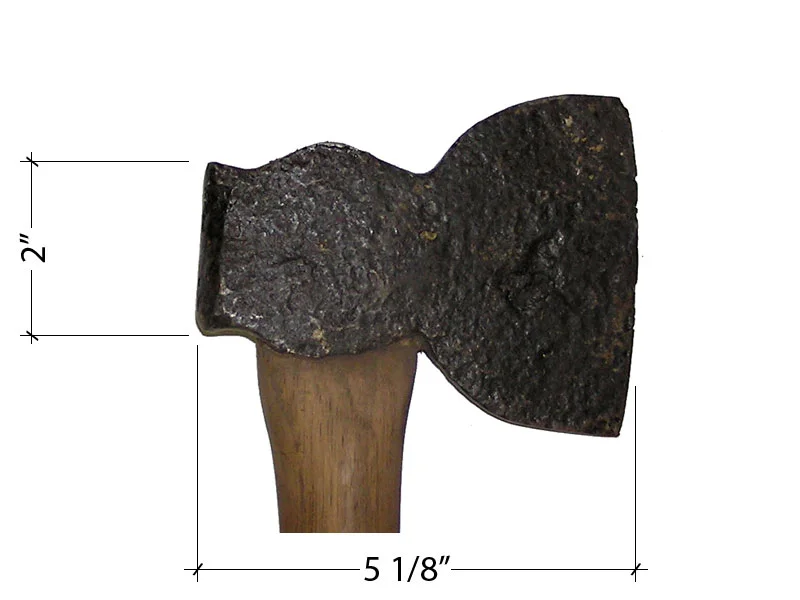
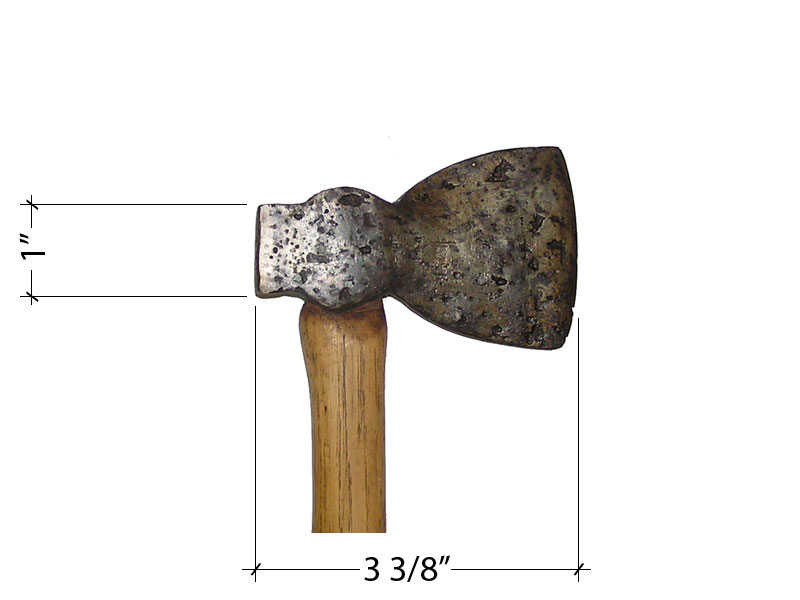
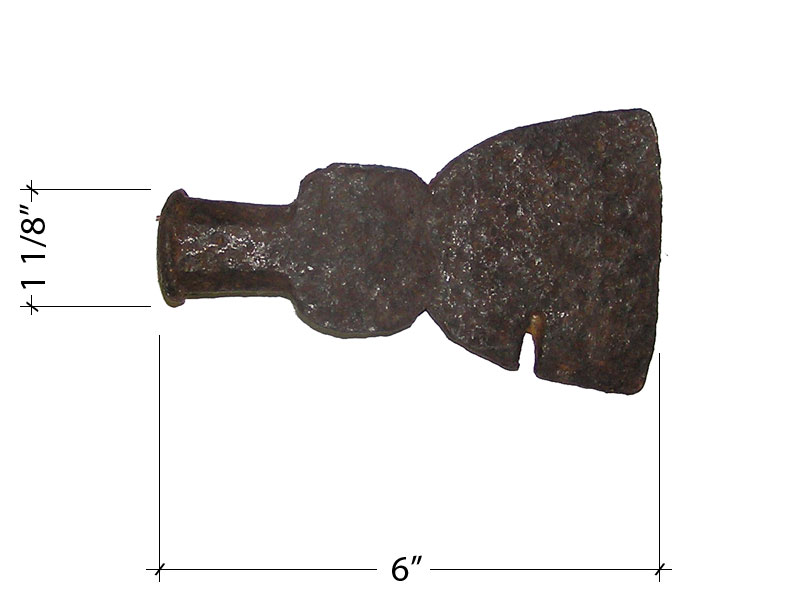
Again there seems to be two major style of hatchet heads: those of a wedge with additional handle support and those that appear more like small broad axes. Some appear to have been used as wedge tools, as evident by having battered butt ends. Only one hatchet head was found to have a US stamp, as detailed on the hatchet in the top group. One carpenter's hatchet head was found with the more hammer-like butt and a nail puller on the heel, as shown in the bottom group. This handy style and variations on it were definitely in use because they also occasionally appear in photographs. The handles seen on the excavated heads are modern and only for display purposes.



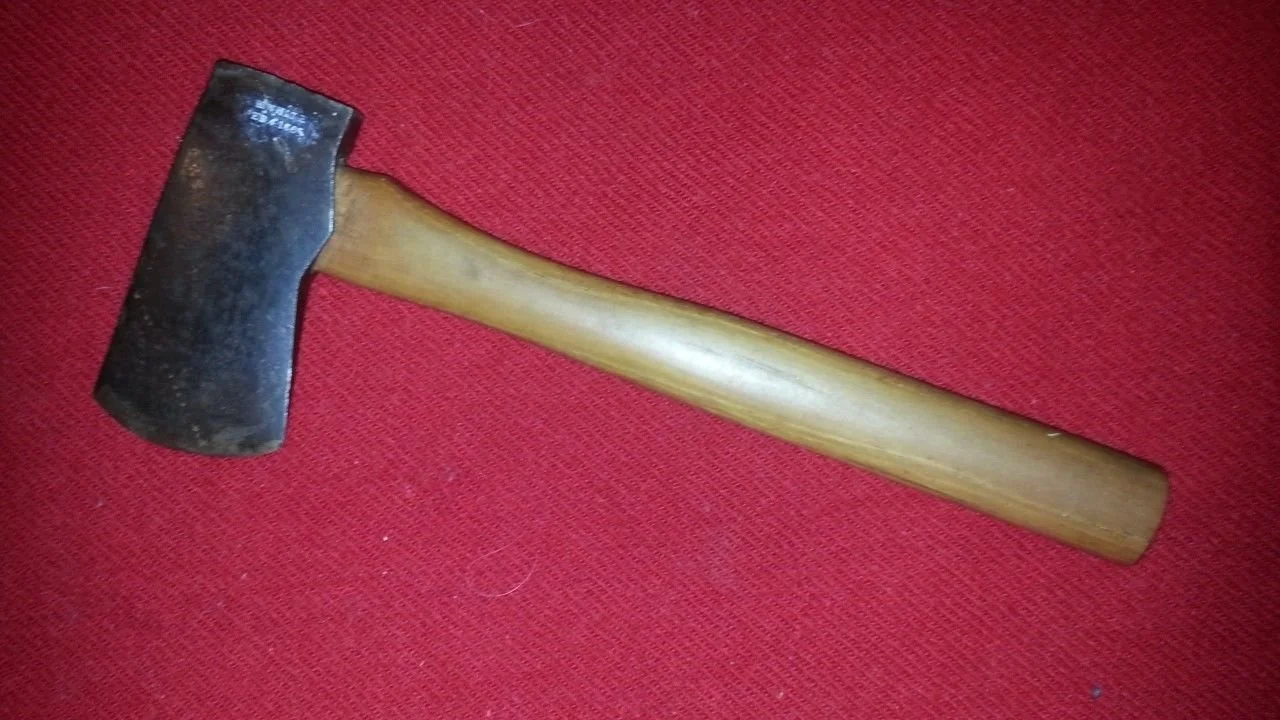
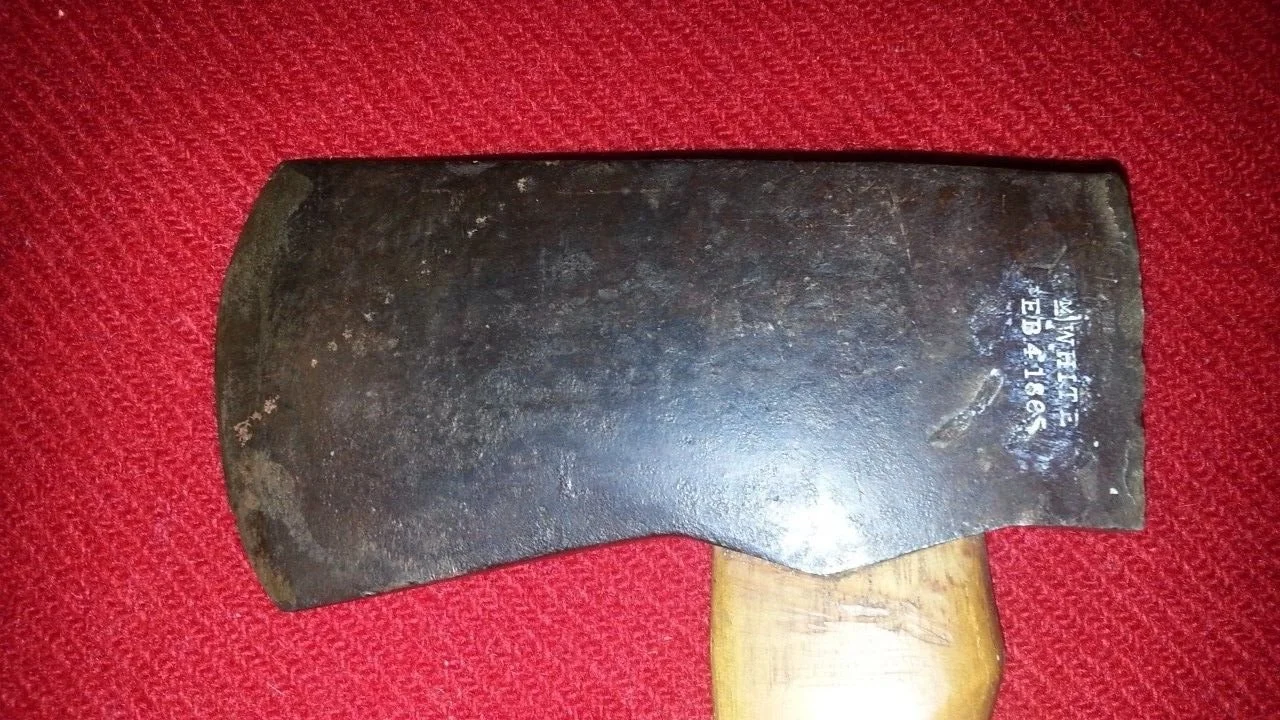
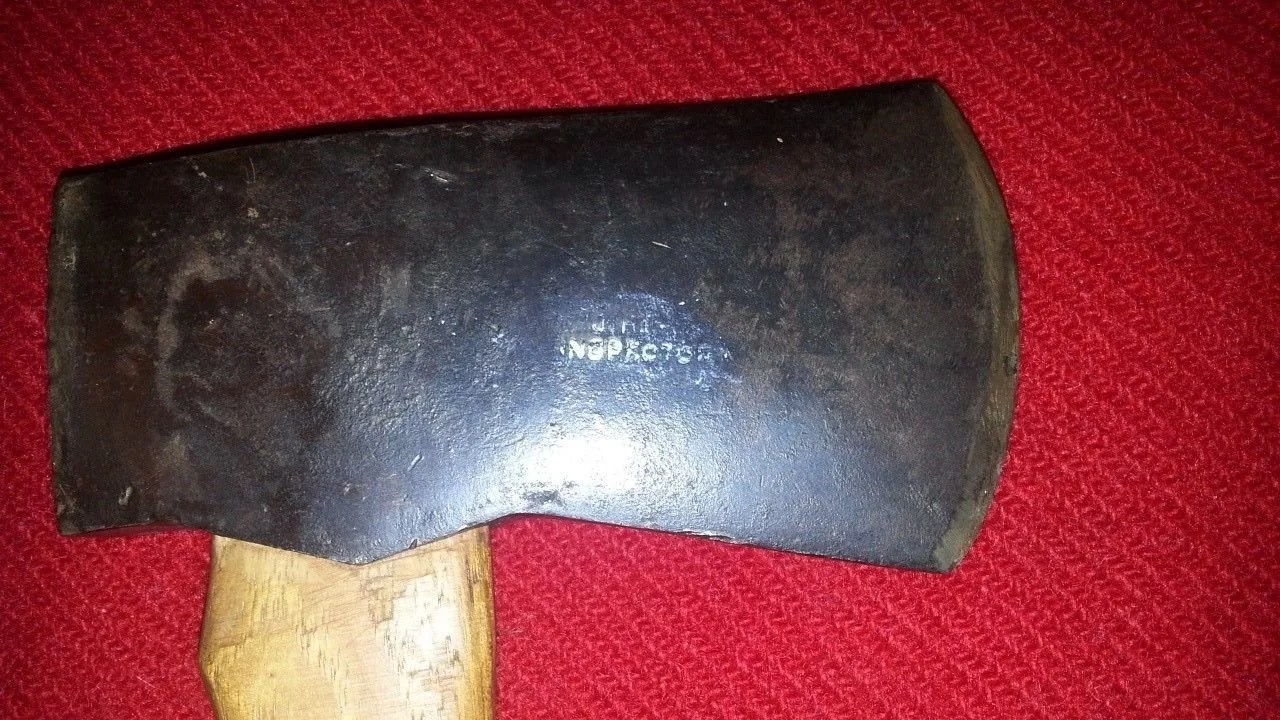
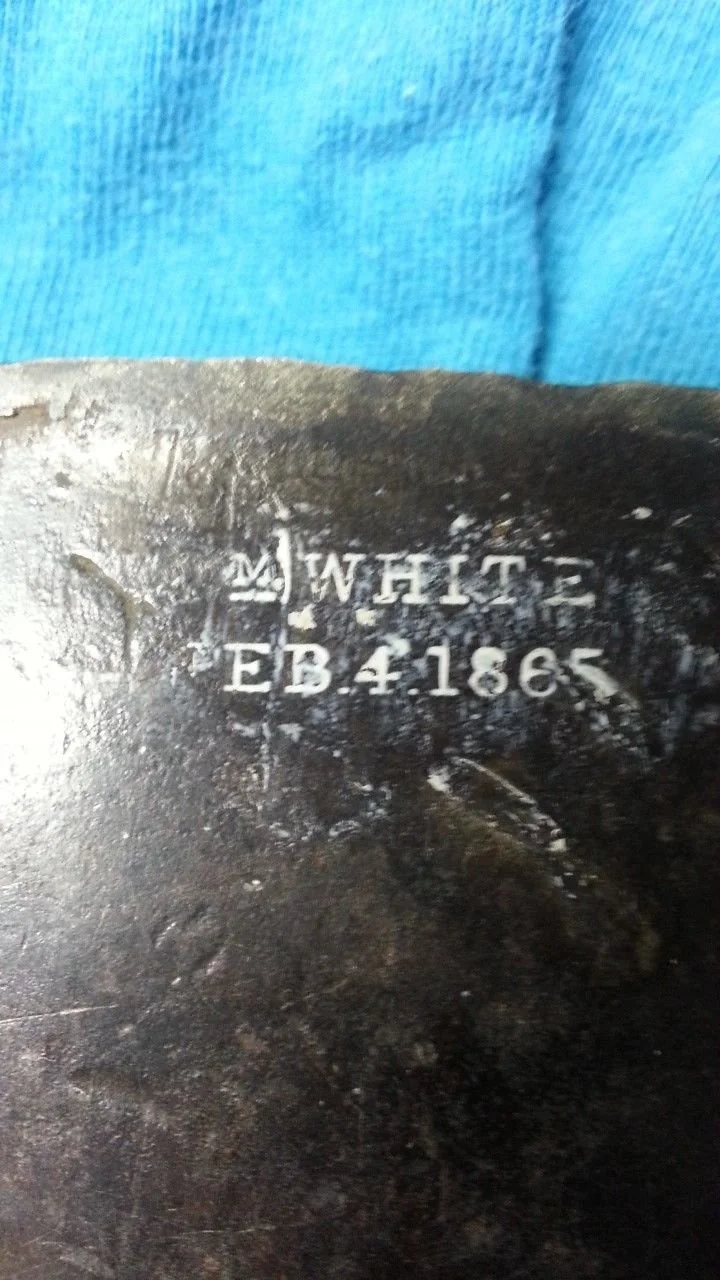
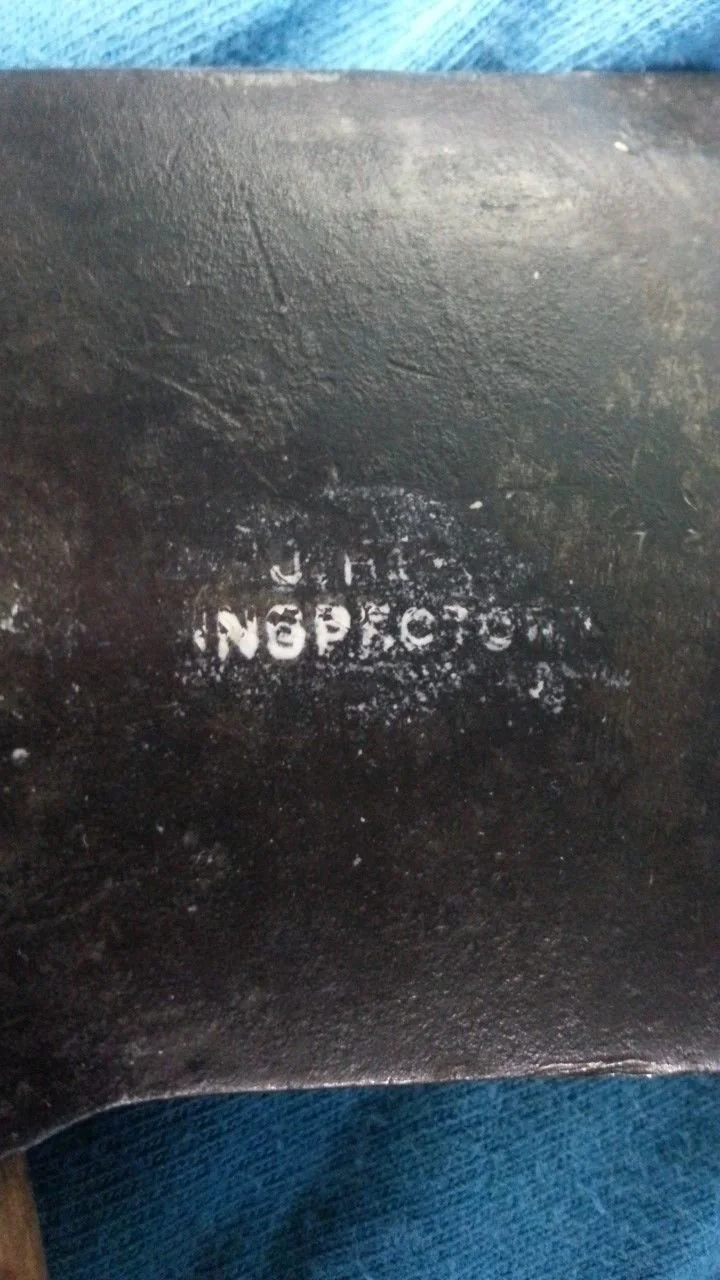
The following hatchet appeared in an online auction and is unique because the maker’s name, contract date, and an inspector’s mark are all stamped on the head. Note the handle is a modern replacement. This was from a contract with William N. White on February 4, 1865 for 10,000 camp hatchets delivered to the New York Depot at the price of of 5,000 @ $0.61 and 5,000 @ $0.65, total $6,300.00. (In today’s dollars: 5,000 @ $12.50 and 5,000 @ $13.32, total $129,073.47)
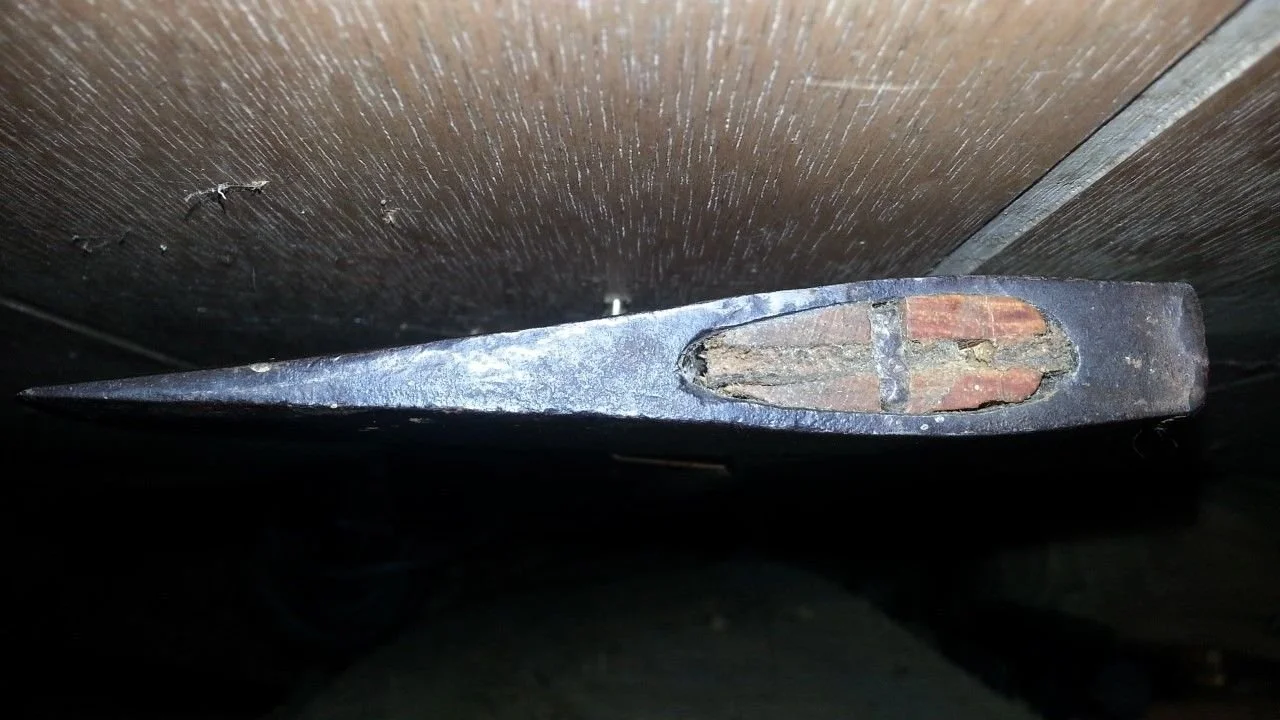
The following hatchets are fantastic examples of soldier-carved identifying marks on their original handles.
Pick-axes
1865 Quartermaster's Manual
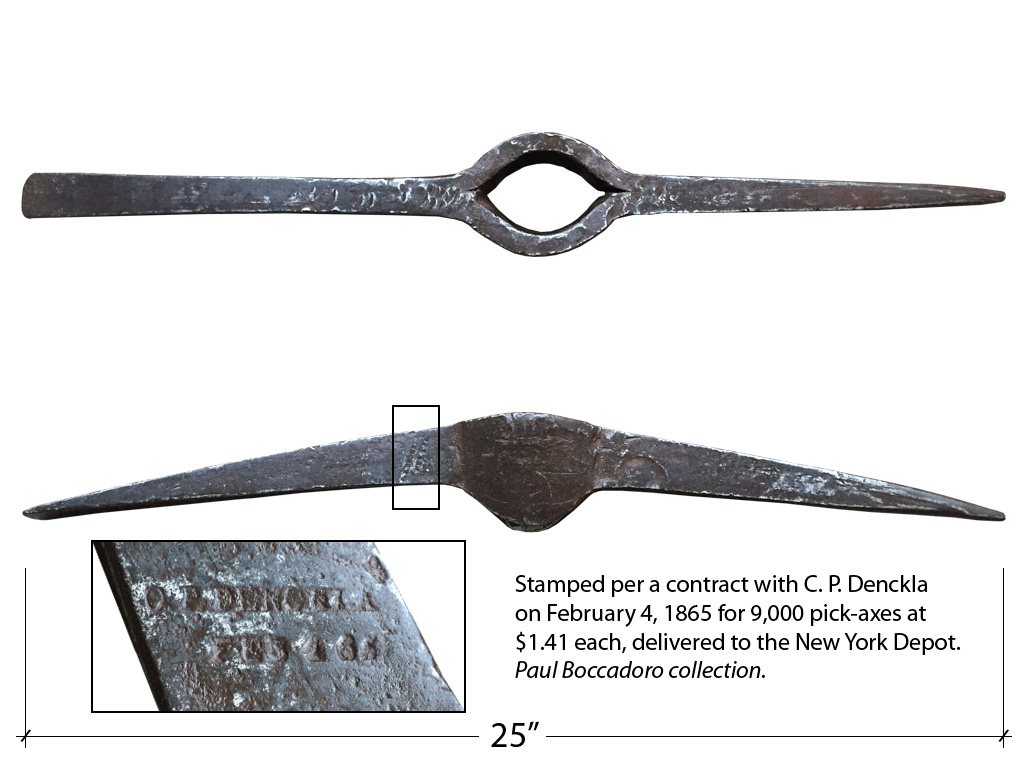
"Pick-axes, – to be of two sizes, 23 and 25 inches long, made of the best American iron and steel, the eye in the center, to be 2 3/4 inches by 1 7/8 inches, outside, and inside, 2 1/2 by 1 5/8 inches in the clear; blade of the hoe end, 1 5/8 inches wide, and the pick end, a square point; each end to be steeled 4 inches and polished bright, without lacquer or paint; to weigh 6 1/4 to 6 1/2 pounds."
"Pick-axe handles, – should be made of good, seasoned hickory wood, 34 to 36 inches long, and free from knots or shakes."
Two styles of pick-axes were among the several originals in the collection: those with flat, straight bottoms and those more crescent-shaped. An additional difference between the styles is the width of chiseled end used for cutting through roots, where it is wider on the flat bottomed pick and more narrow on the crescent-shaped picks.


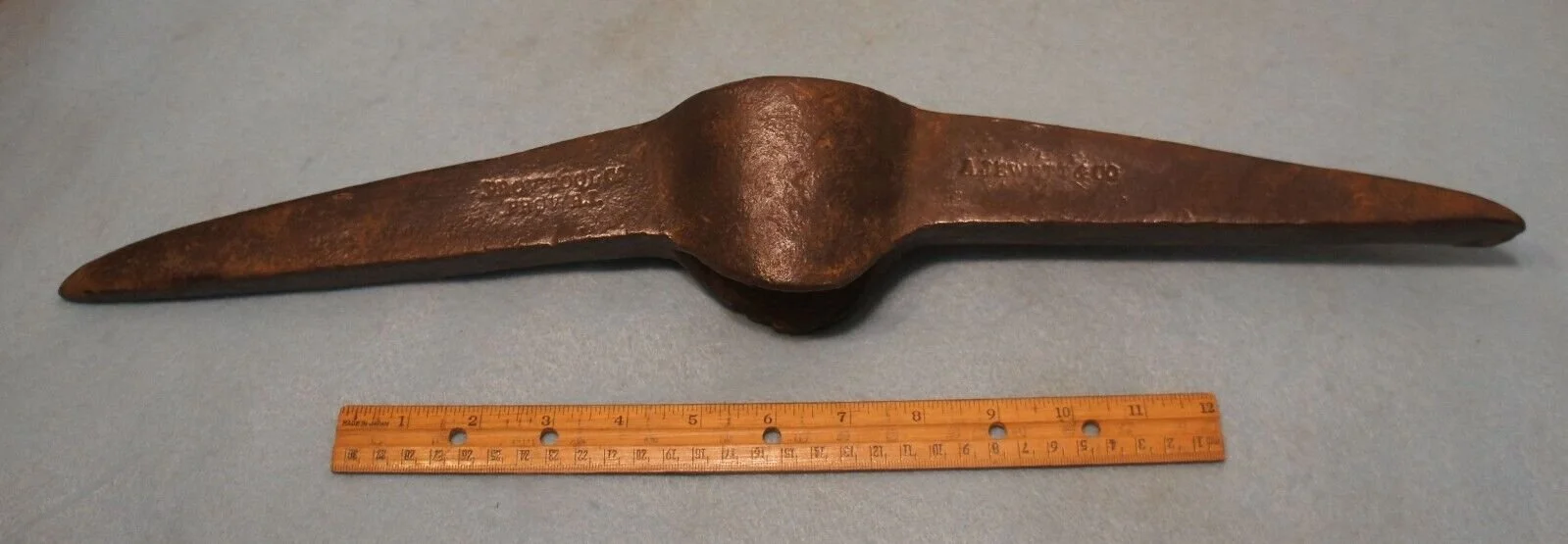
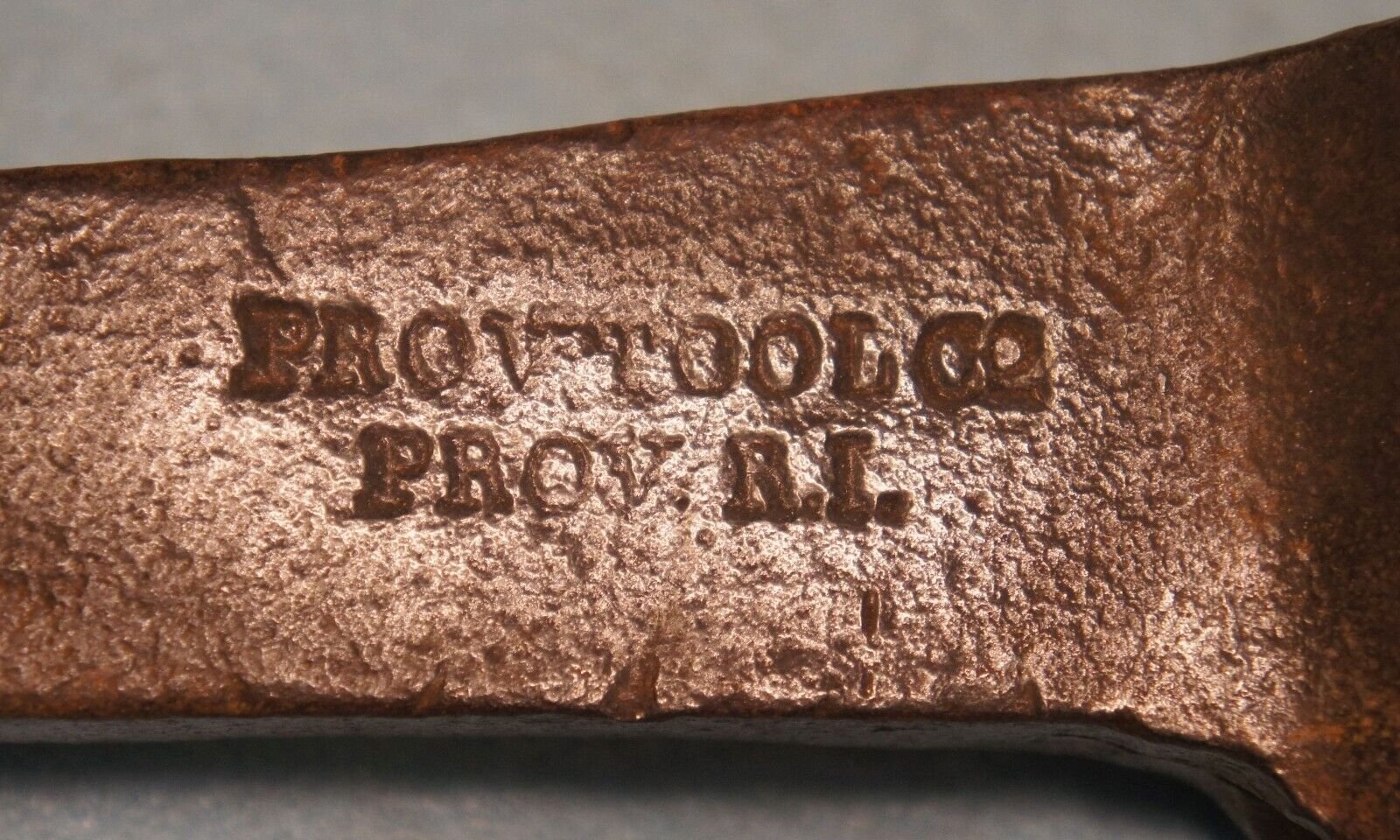
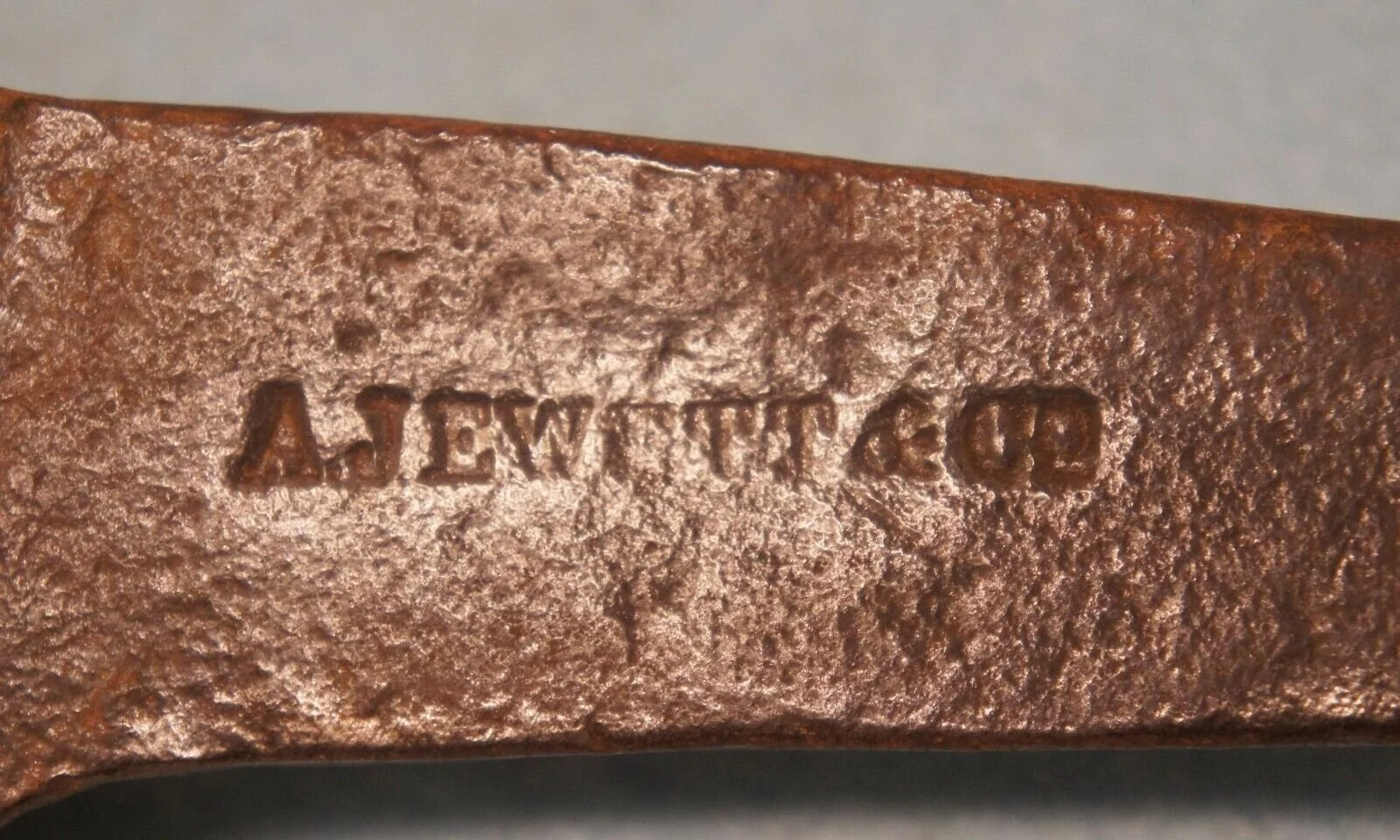
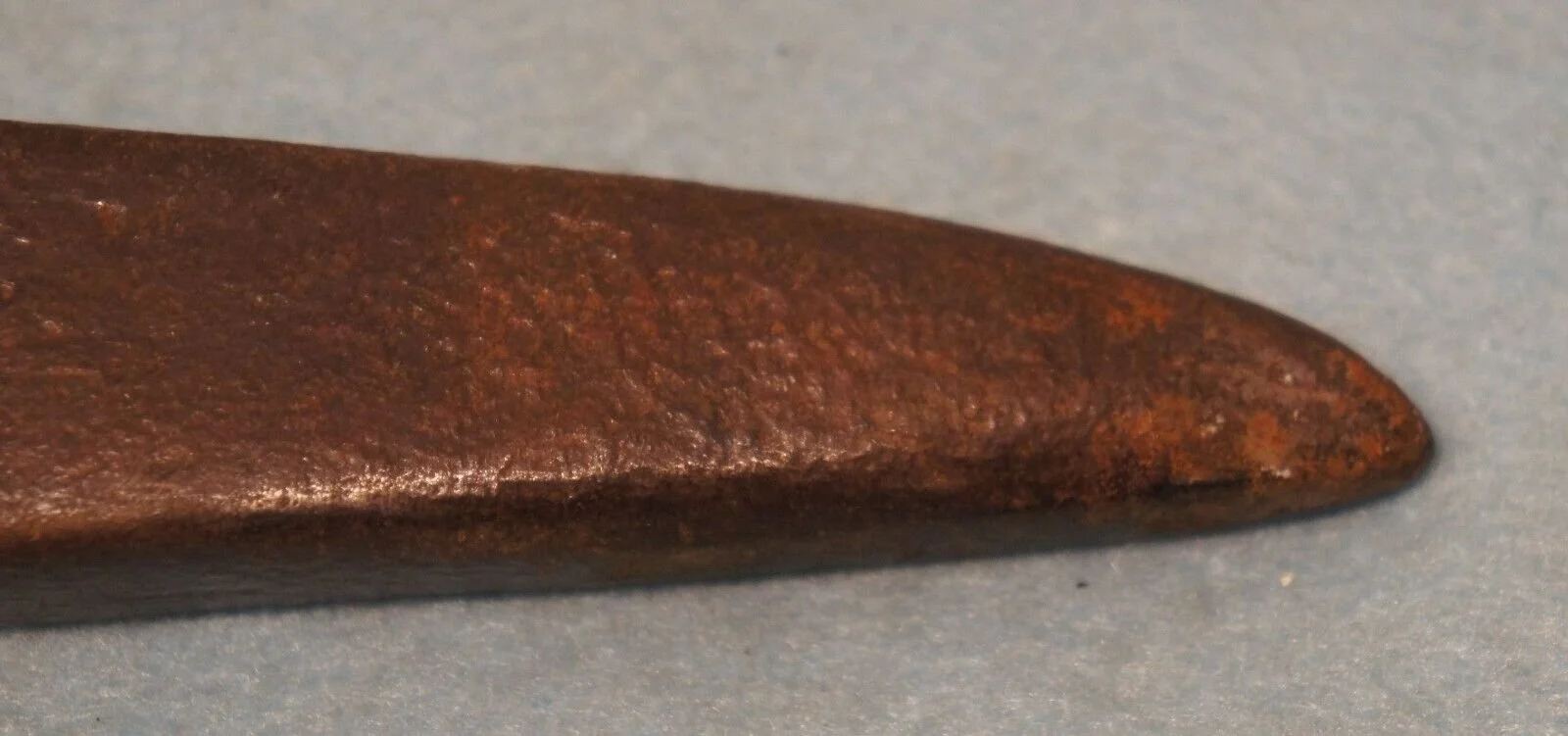
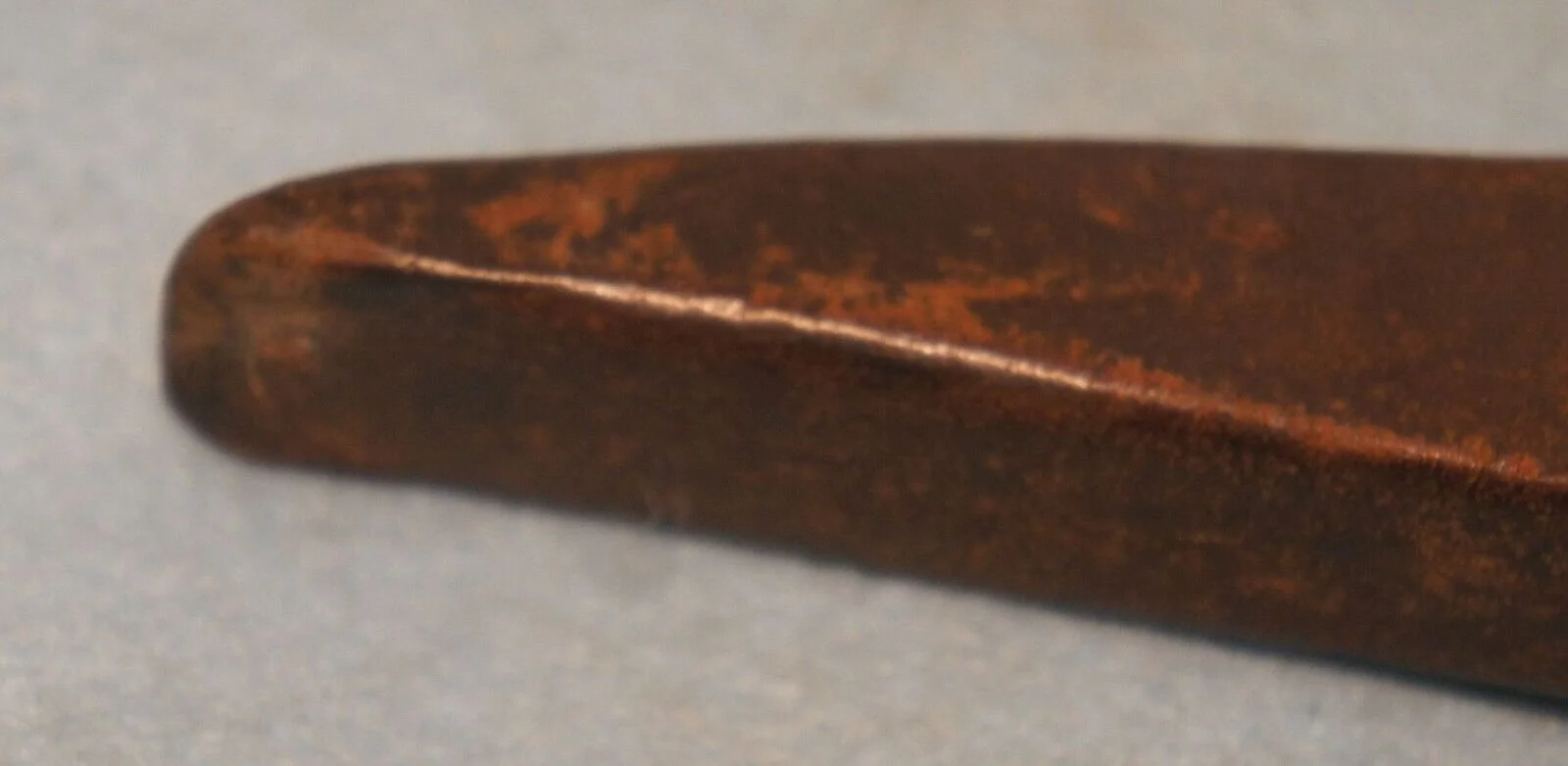
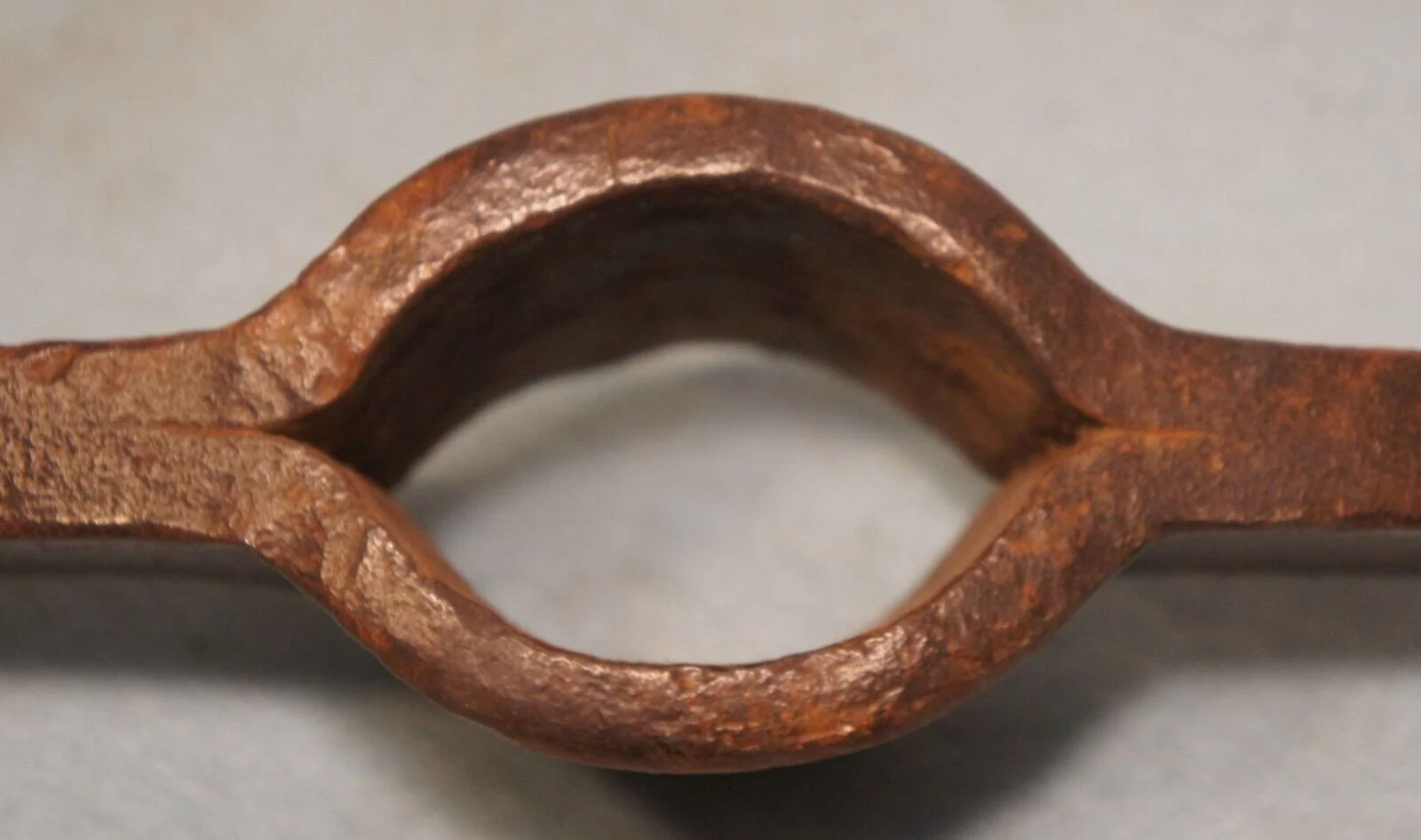
The following beautifully-marked pick-axe surfaced in an online auction and was actually stamped by both the Providence Tool Company and A. Jewett & Co., the latter of which only existed during the Civil War and also supplied canteens to the US Army. The Providence Tool Co. was likewise a contractor supplying muskets, bayonets, cavalry swords, ammunition, and the Peabody carbine. The combination of the A. Jewett name and the Providence Tool Company is interesting, and may have been an example of subcontracting. Total length of 21” and about 3” high at the center.
Spades
1865 Quartermaster's Manual
"Spades, – three sizes, Nos. 1, 2, and 3, made of the best American or Swedish bar iron, pointed with steel 5 inches deep from the cutting edge. No. 2, plain back, medium size; length of blade 11 3/4 inches; width at top 7 1/8 inches; width of edge, 6 7/8 inches; thickness of blade at top, No. 14 wire gauge; at edge and middle, No. 10 wire gauge; handle of ash wood, 2 feet 5 1/2 inches long, secured at top, "D," with 2 iron rivets, and in the socket of the blade with 3 iron rivets. Weight, 3 3/4 to 4 1/2 pounds."
Contrary to popular belief, not all spade heads of the period were constructed of two sections of metal connected with five rivets. While this method of construction was in practice by some manufacturers, there were many being produced with out this construction method. All examples feature additional small plates on the top edge for pushing the spade into the ground with a foot, and all taper half an inch down to the tip. The necks of spades are generally more straight when compared to a more curving neck as seen on shovels. The handles are antique but not original to the heads, and are fitted onto the original heads for display purposes.


Shovels
1865 Quartermaster's Manual
"Shovels, – three sizes, Nos. 1, 2, and 3; made of the best American or Swedish bar iron, pointed with steel 5 inches deep from the cutting edge. No. 2, medium size, plain back, with "D" handle; blade 11 1/2 inches long; 9 5/8 inches wide at the bottom, 8 5/8 inches wide at the top; handle of ash wood 2 feet 5 1/2 inches long, secured in the socket with 3 iron rivets; in top, through the "D," with 2 iron rivets. Weight 4 3/4 pounds."
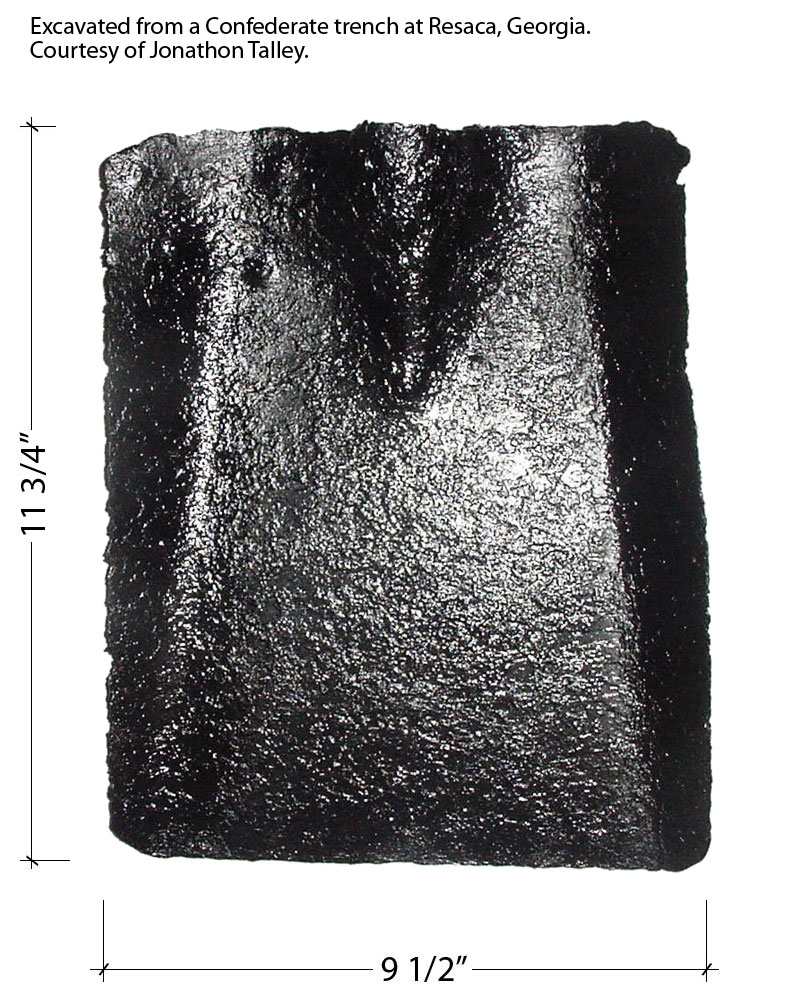
The first three images show flat shovels, seen very often in original photographs. The first two heads show no rivets, while the third (excavated from a Confederate trench at Resaca, Georgia) does show riveted construction. According to the White Oak Museum curator, other similar heads have been found in winter huts with the front flat edge bent upward. It is hypothesized these heads were from broken shovels and implemented as skillets for use inside the fireboxes, as the necks would have provided excellent handles. The last image shows a different style of digging shovel. The head on this particular one also exhibits the five rivet construction seen on one of the spades above and one of the flat headed shovels. Note how much more the neck curves for leverage than the spades.



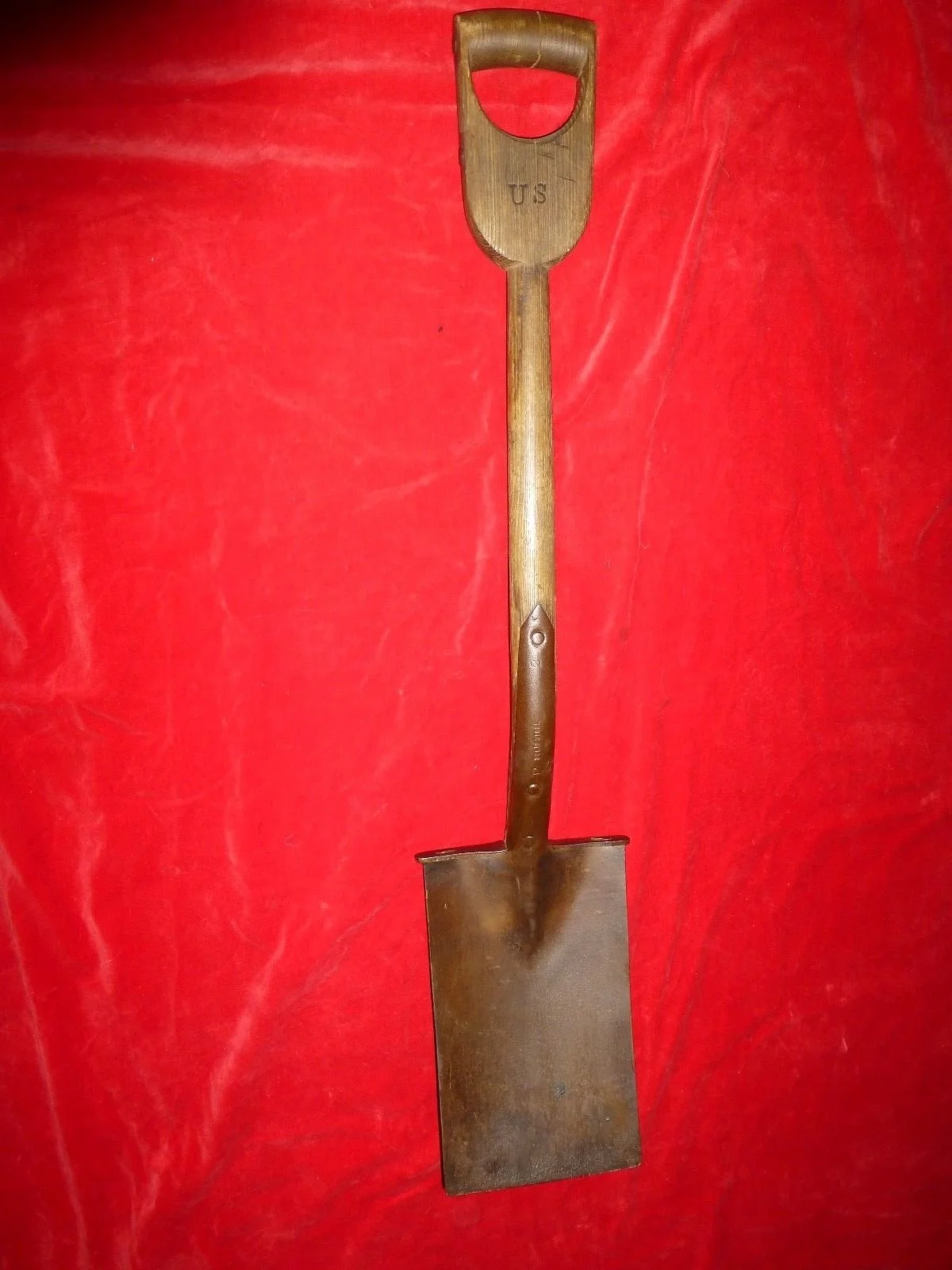
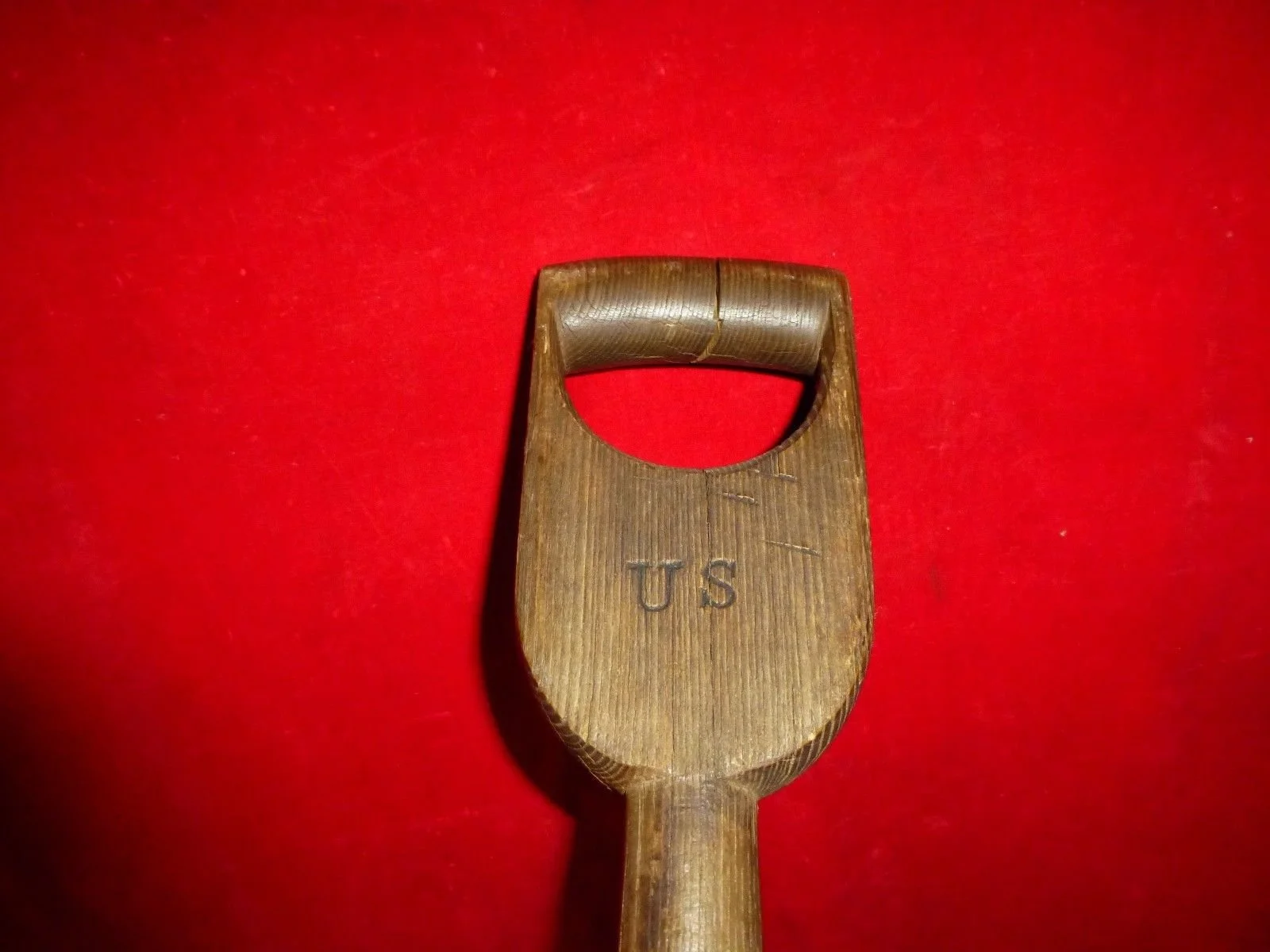
This surviving long-handled shovel features a stamped “US” on the handle and measures 63” long. (Don Troiani collection, sold in 2018 by Skinner Auctions)


Additional Tools
Other tools such as these could have made their way into permanent camps. Only one mattock head was found, shown at left, and the broad axes could have been used for constructing huts or other buildings that required squared lumber. Broad axes may have been carried by Engineers, but it is doubtful they were used by standard troops or pioneers.


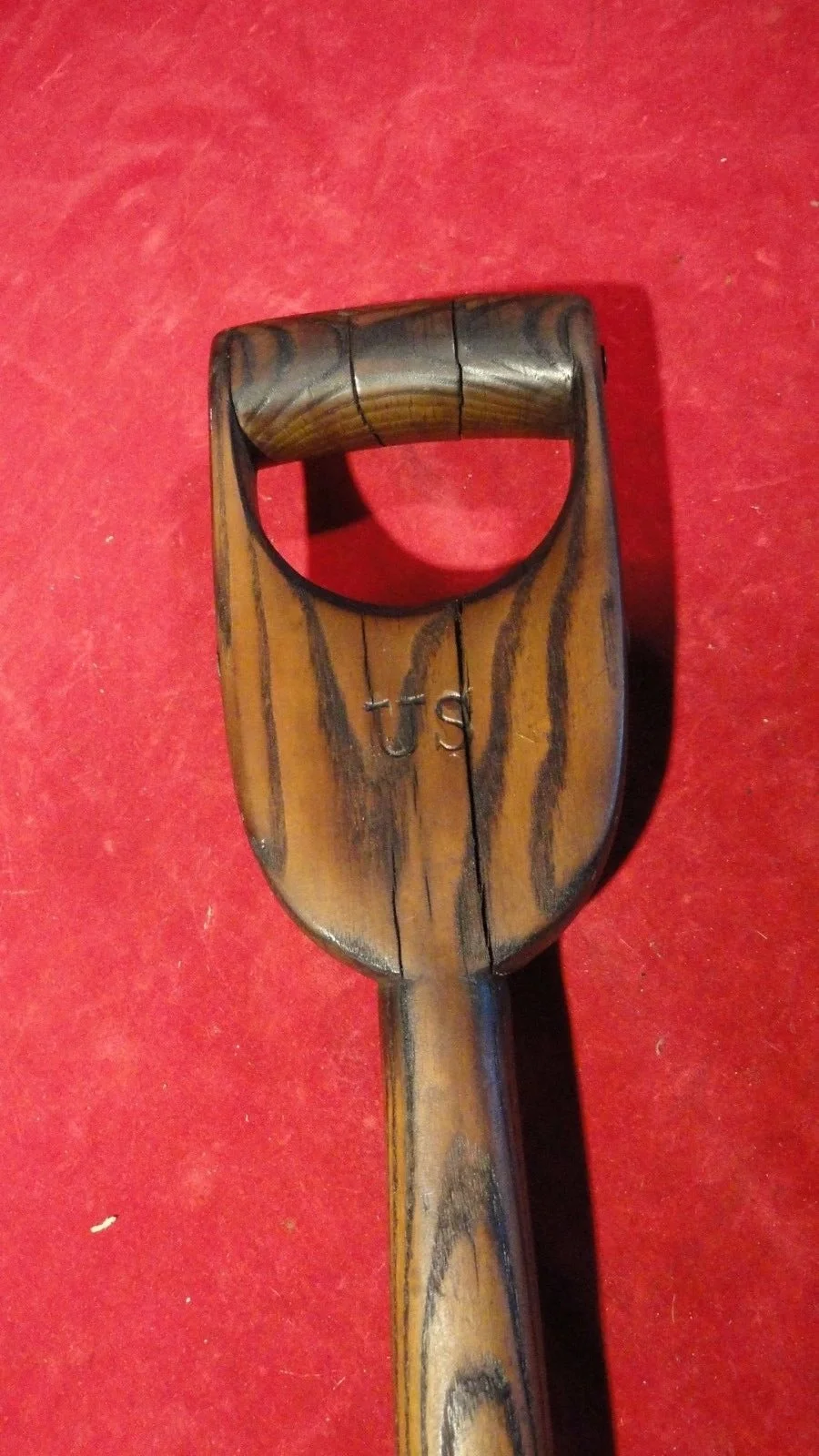
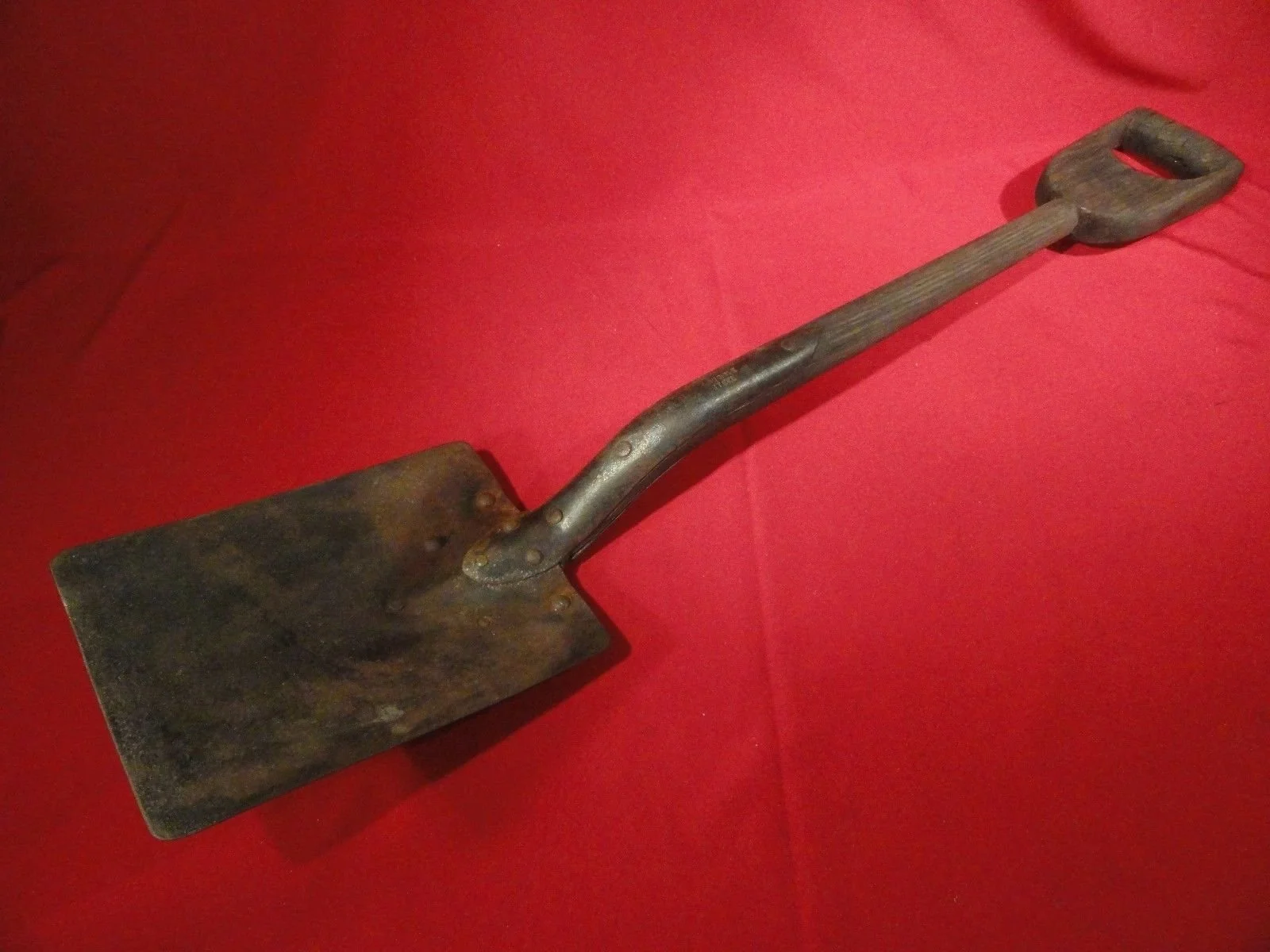
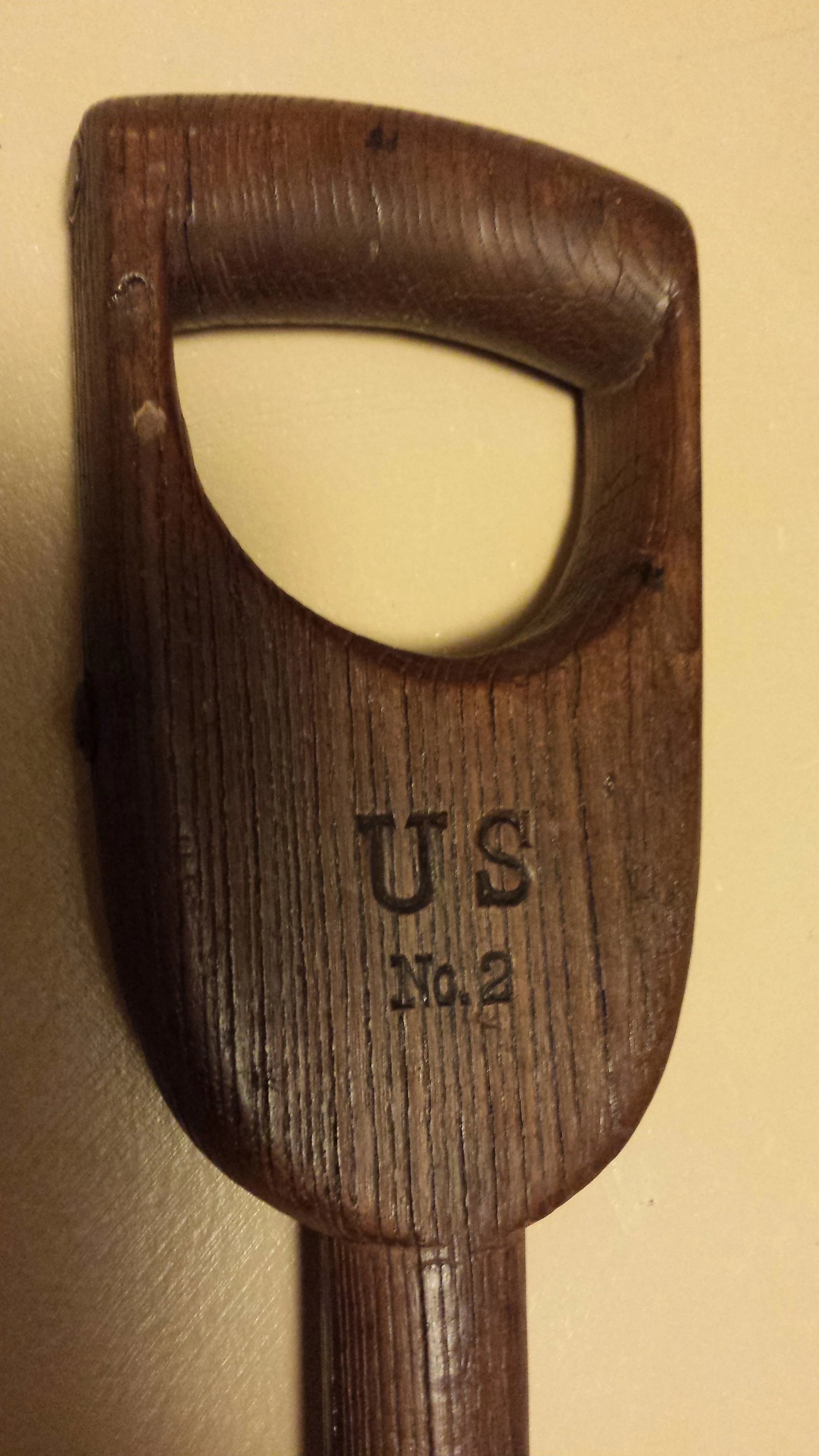
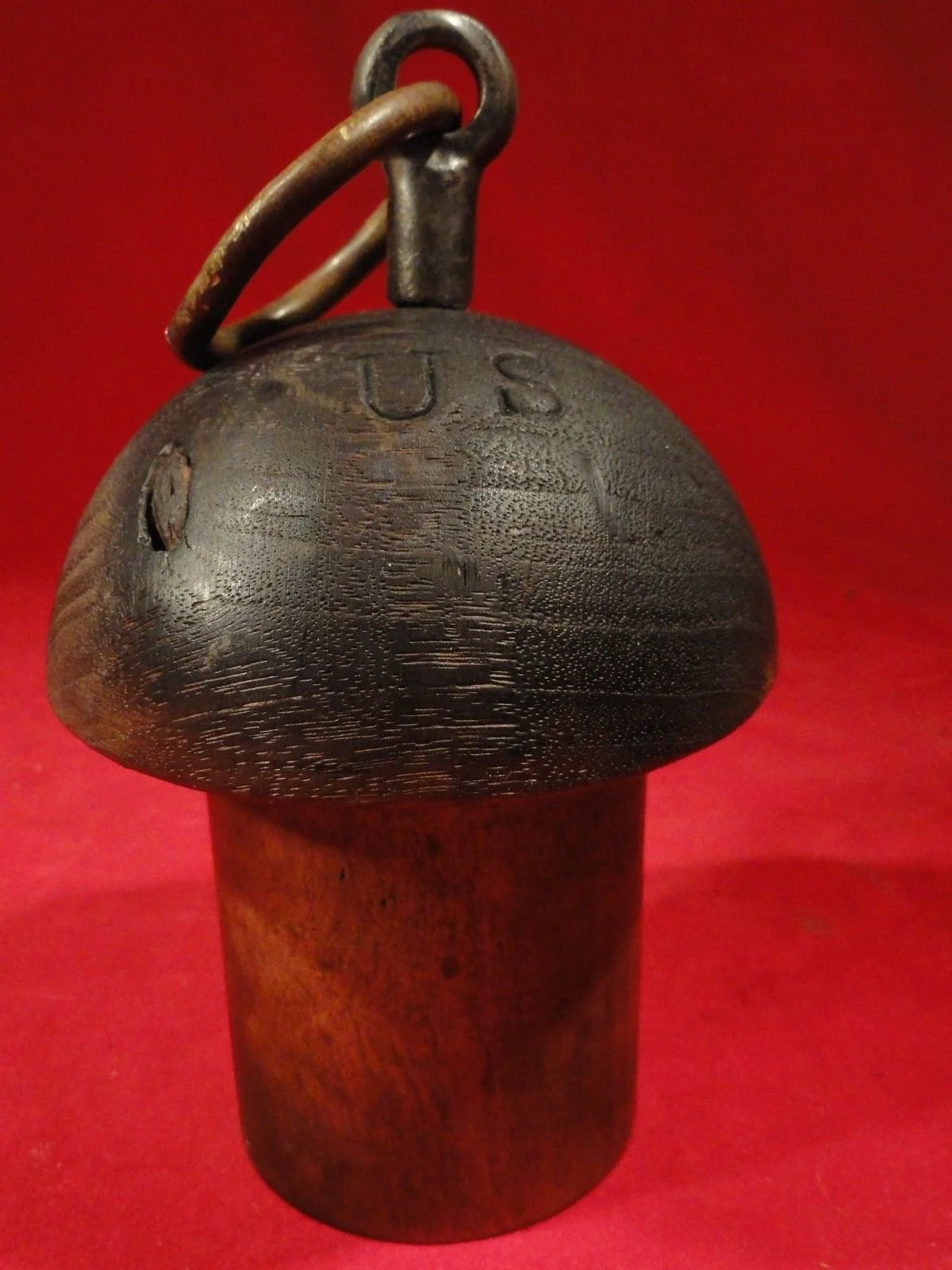
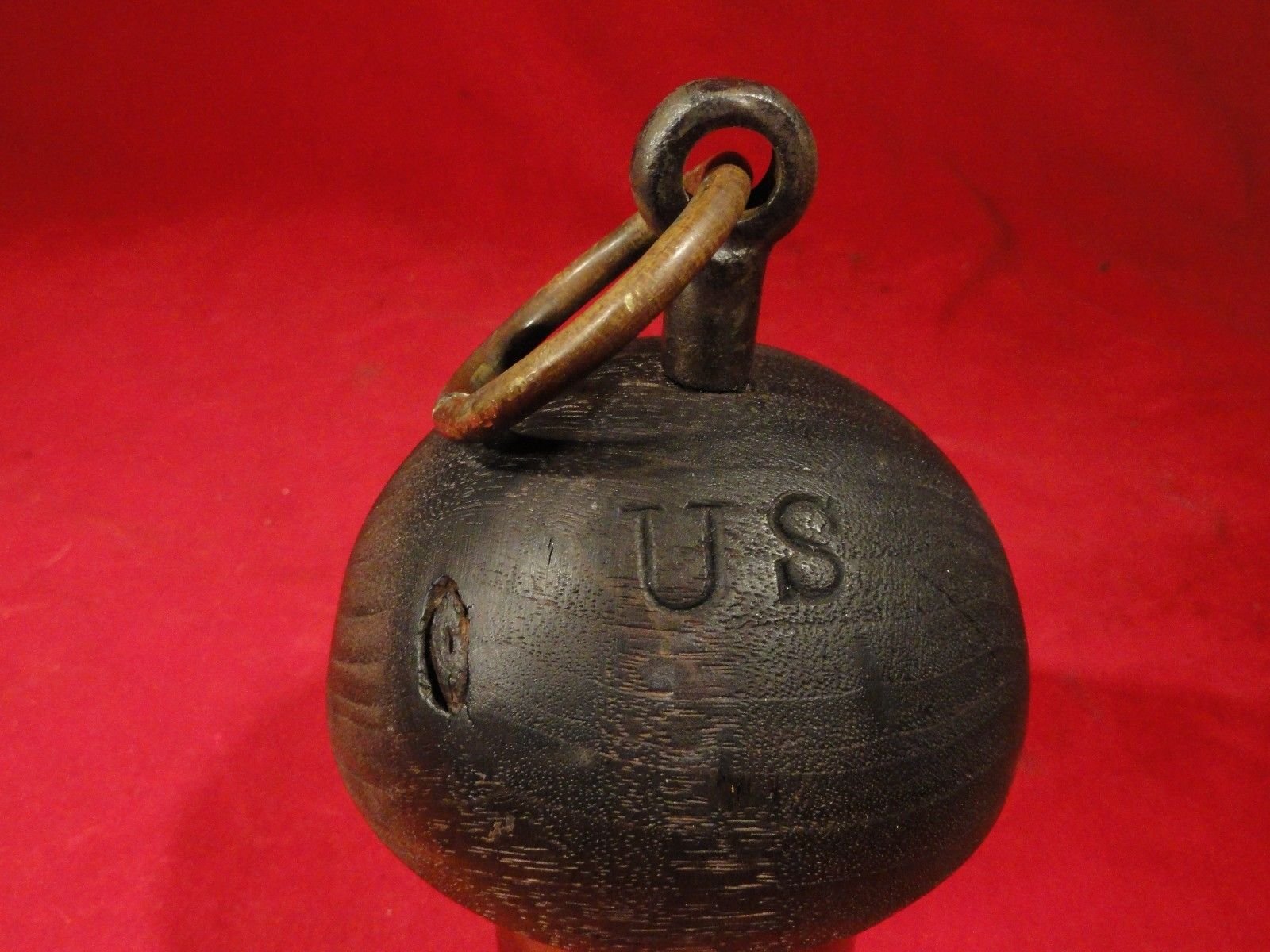
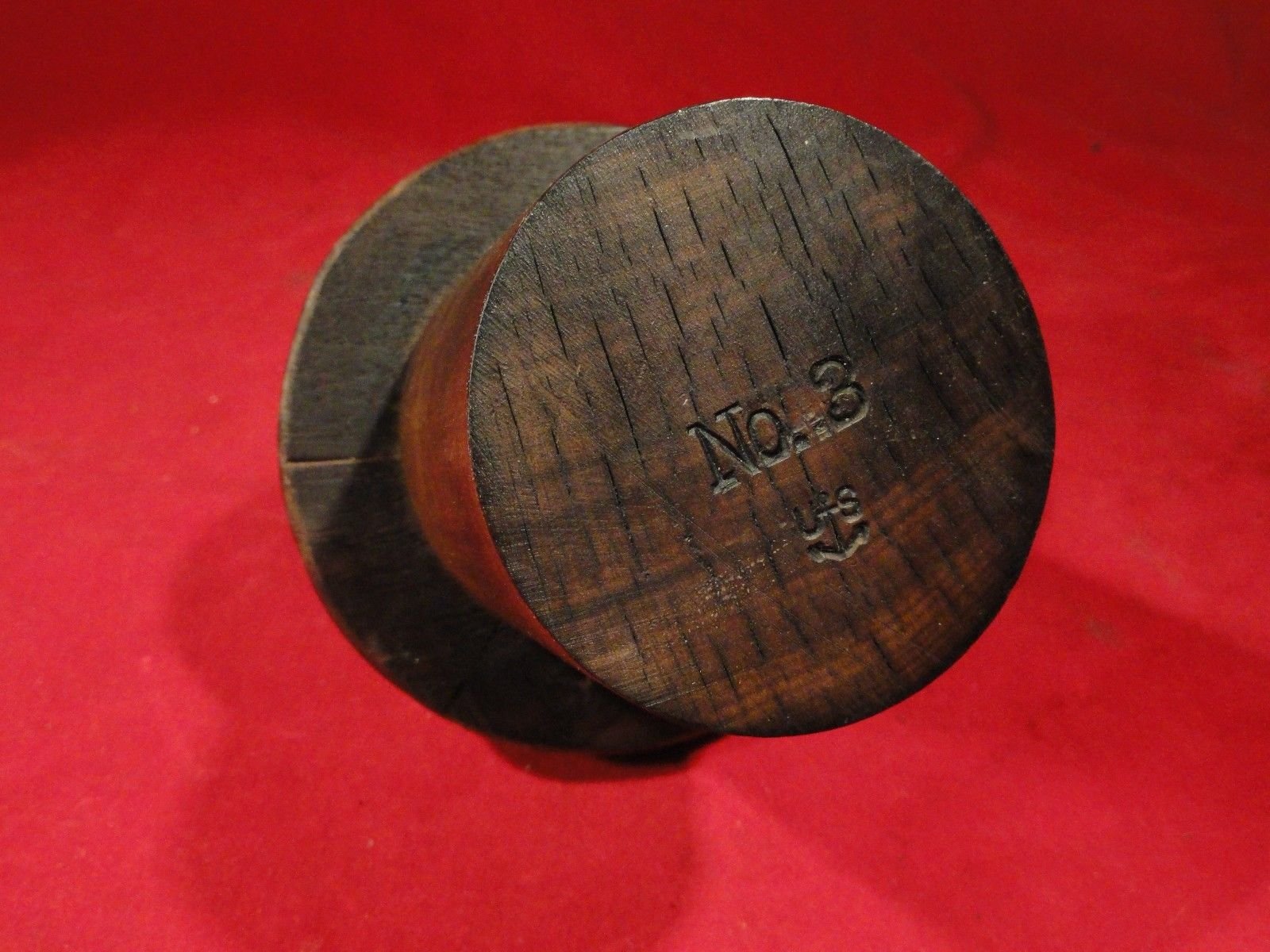
Collectors: BEWARE OF FAKES!
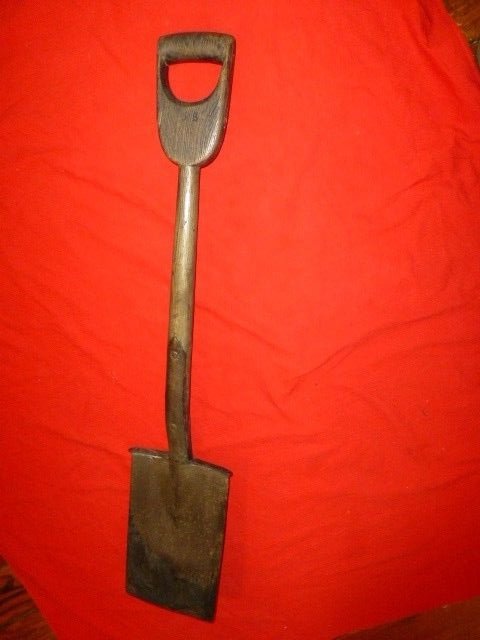
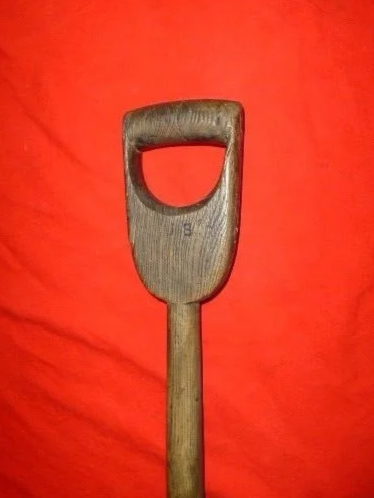
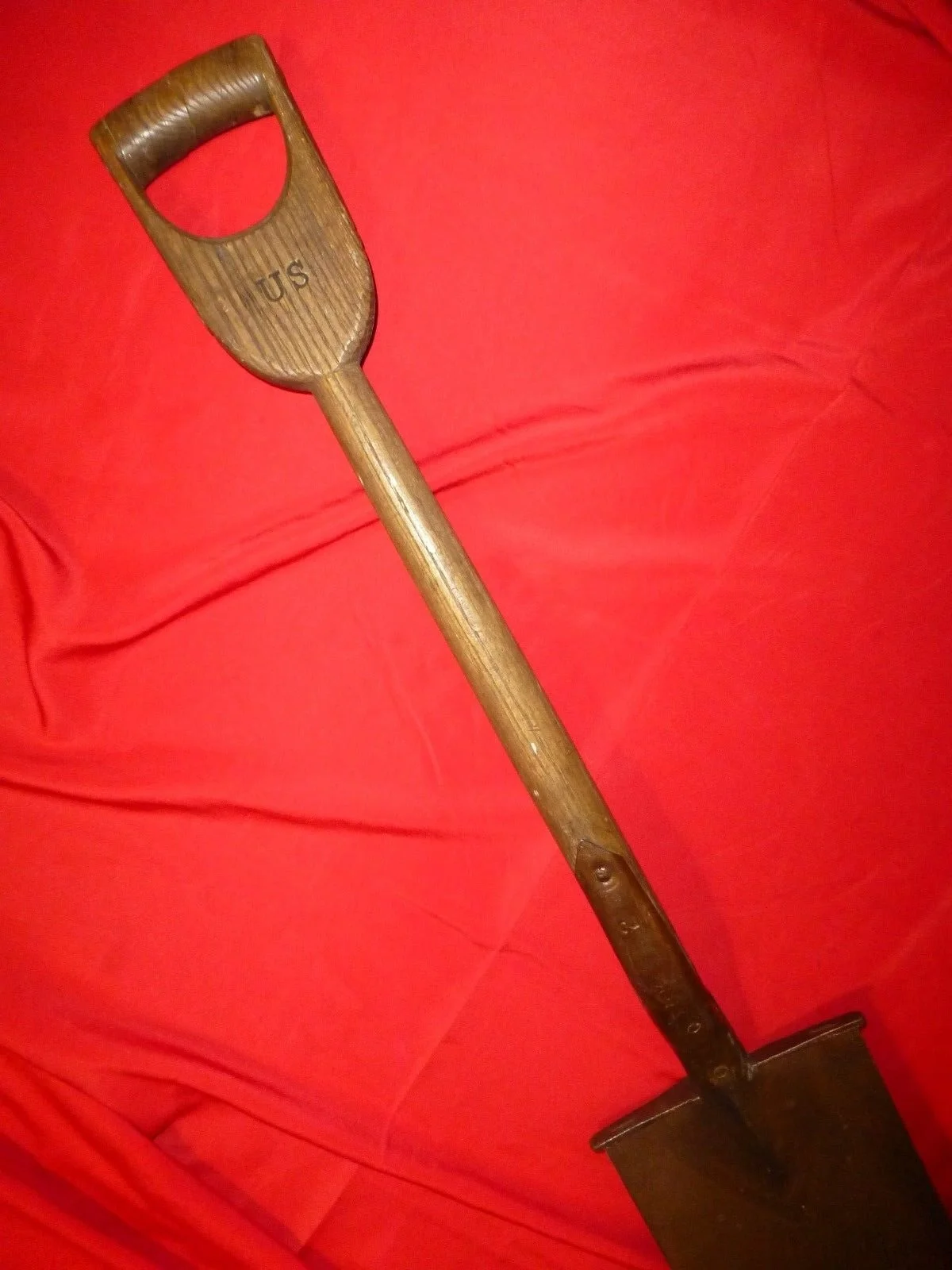
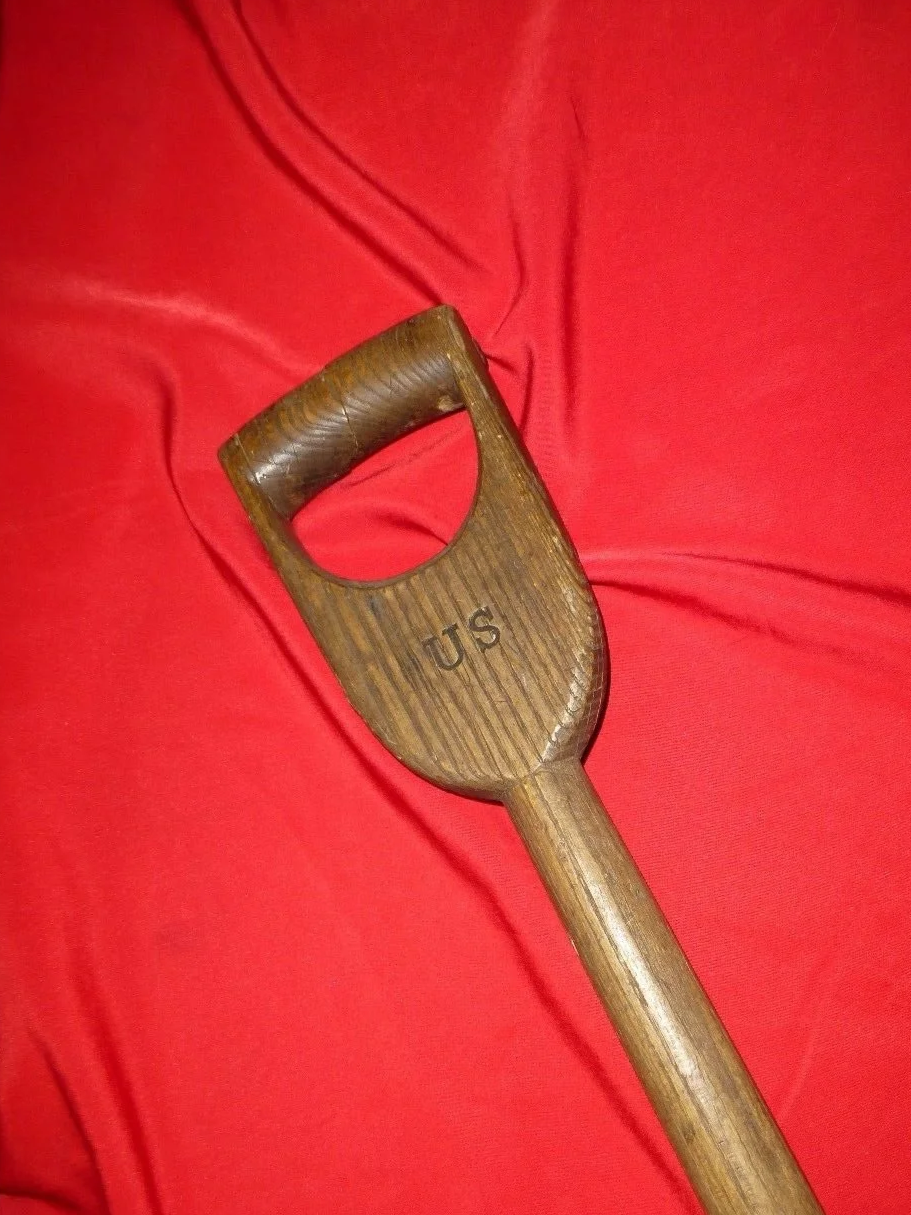
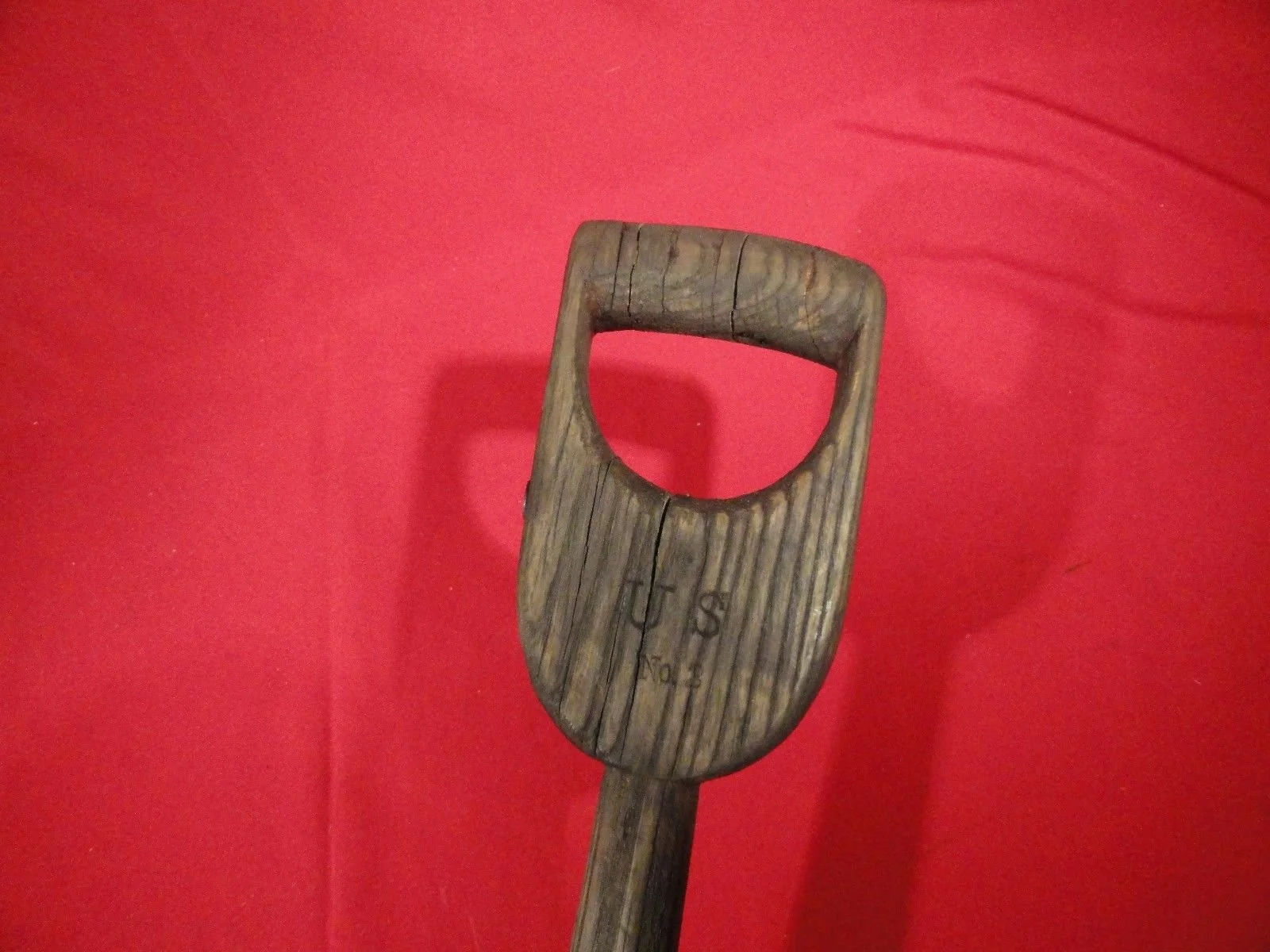
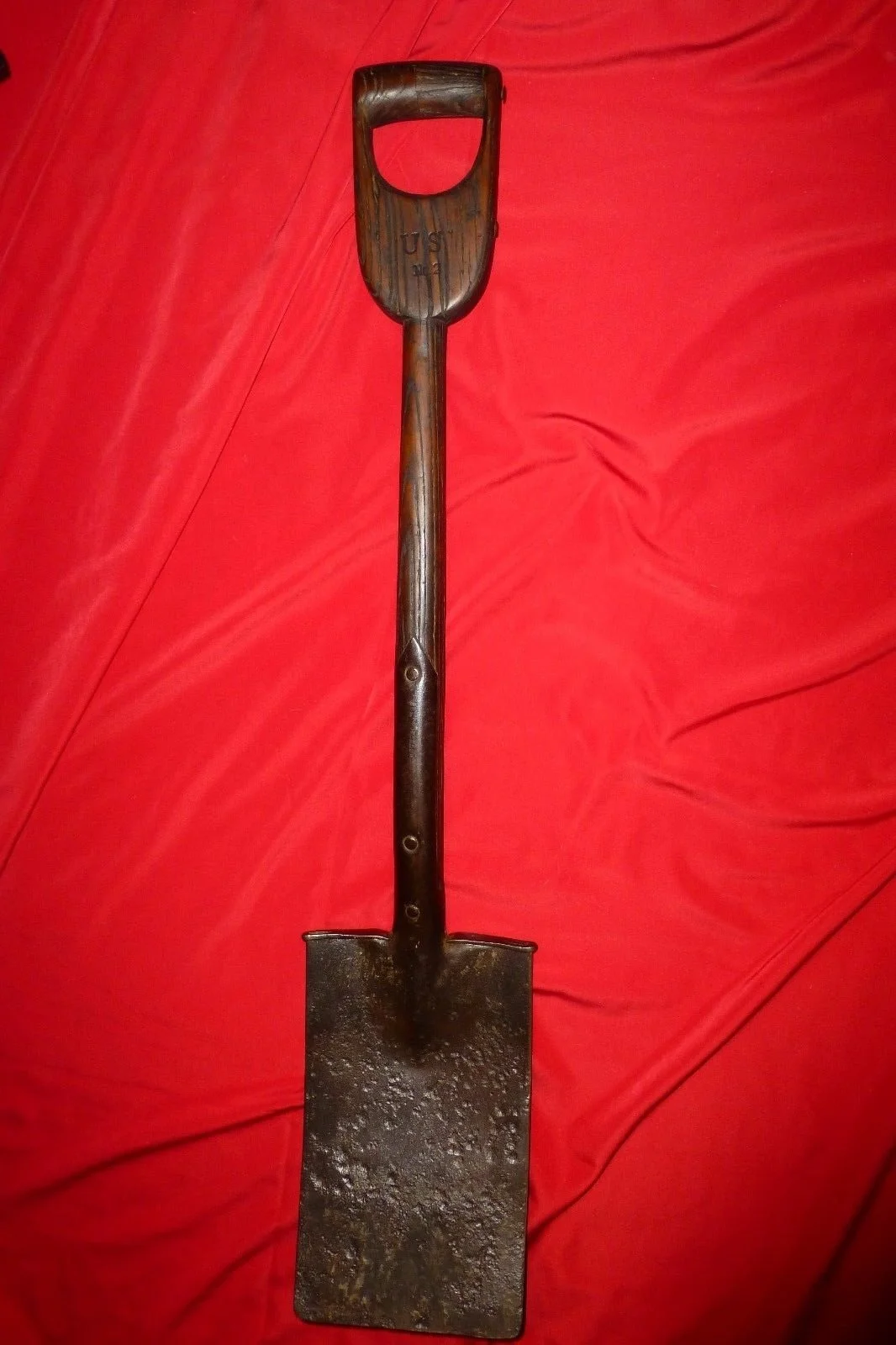
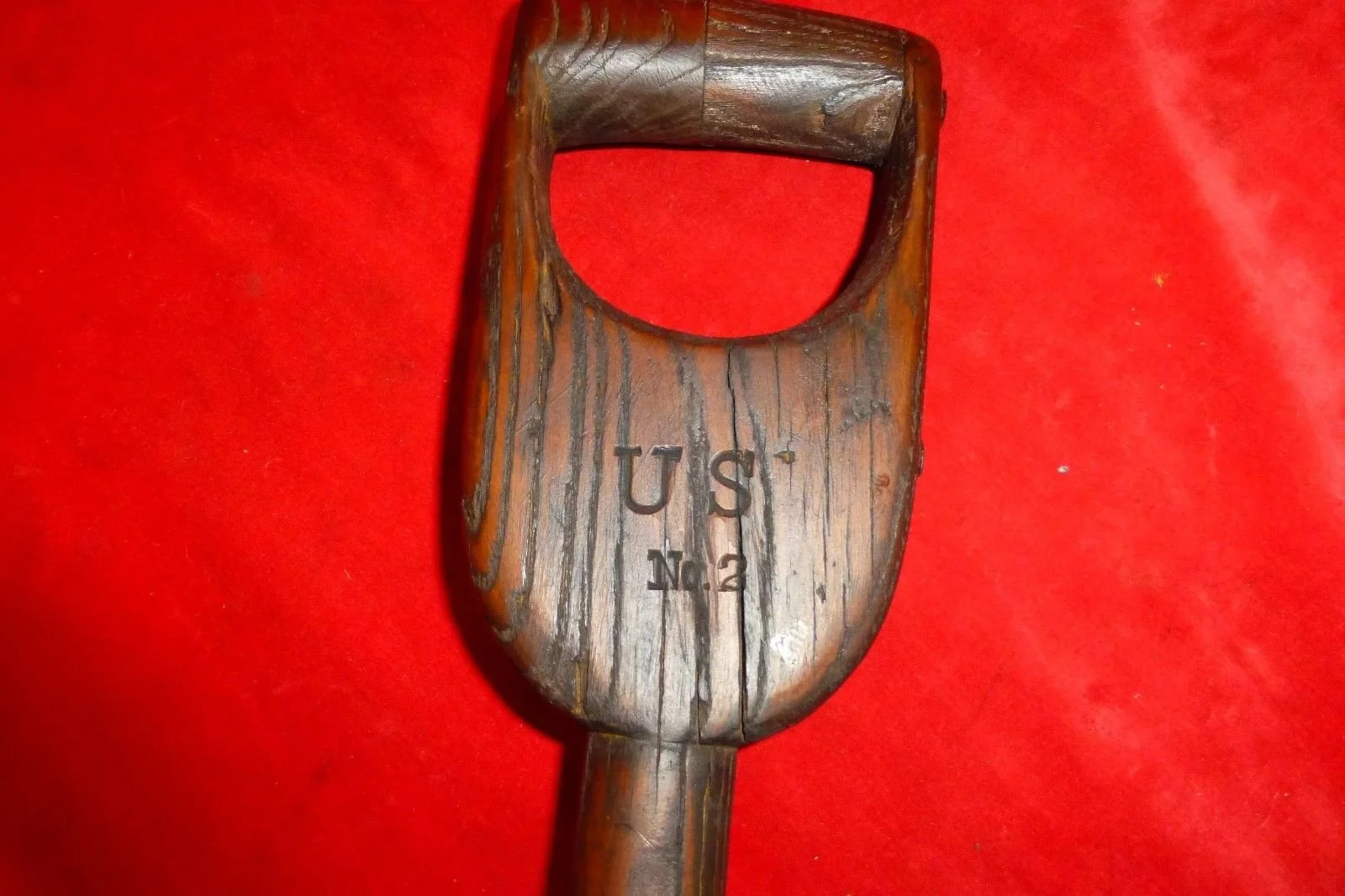
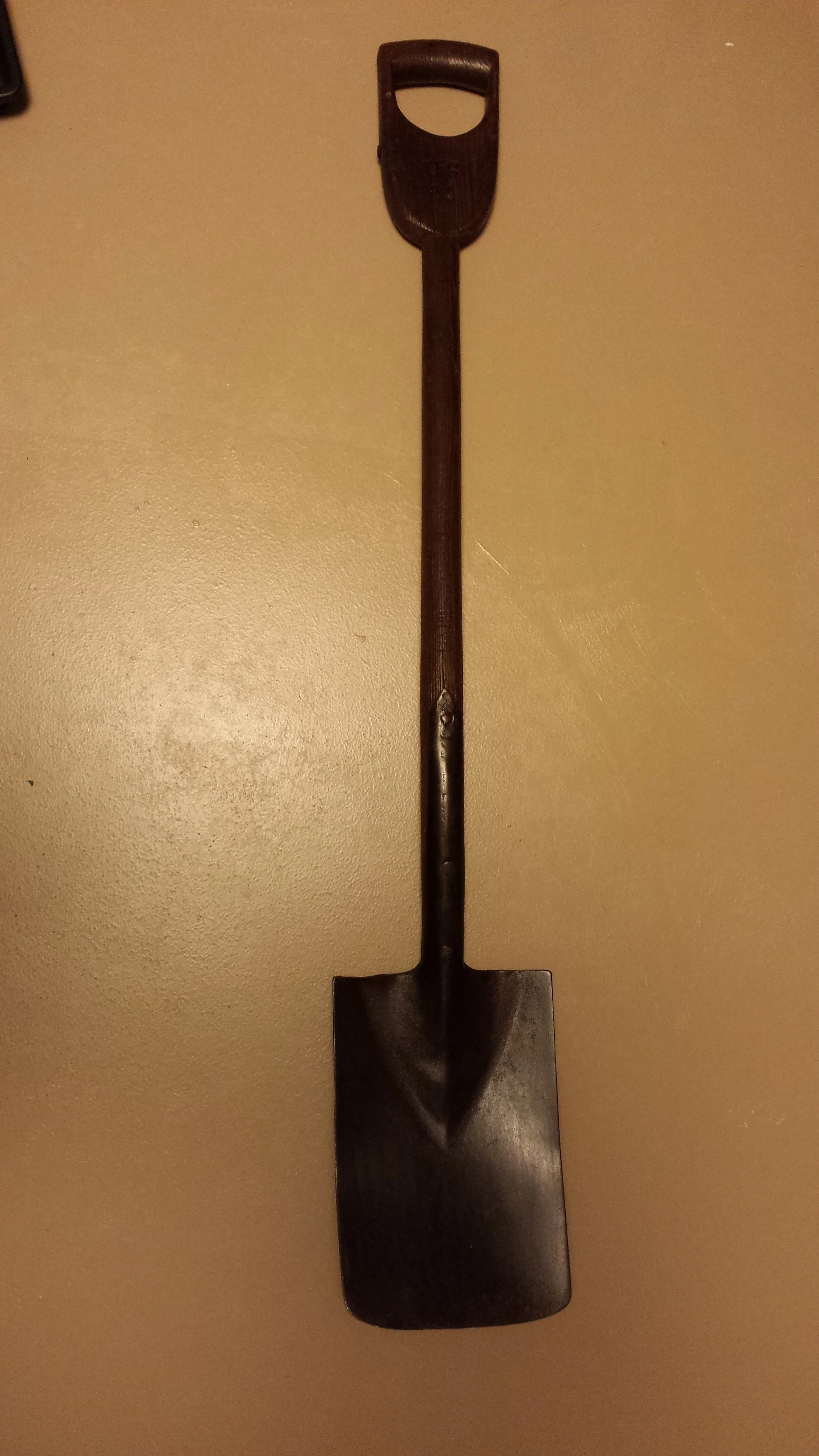
Occasionally an unscrupulous militaria dealer will modify an otherwise ordinary antique tool to sell as a genuine Civil War issue army tool. Unfortunately, a large string of these fakes originated from a well-known online auction fraudster who stamped the same “US” on numerous antique D-handle shovels, and they continue to circulate among unknowing Civil War collectors. Here are several examples of these faked shovels, plus another wooden device he sold that has his same exact faked stamps. Remember to only buy from reputable dealers and research items thoroughly before buying!